

Choosing where to stay in Sapporo is refreshingly simple. Hokkaido’s capital is laid out on a neat grid, and almost everything visitors need sits along one north–south line: Sapporo Station in the north, Odori Park in the middle and Susukino, the nightlife district, in the south — about 2 kilometres in all, connected by underground walkways and the Namboku subway line. Your choice comes down to whether you want transport, central sightseeing or food and nightlife on your doorstep. This guide compares the main areas, plus quieter options and hot-spring stays nearby.
Last checked: October 31, 2026. This guide is based on research and comparison of official sources and current travel guides, not a sponsored stay. Transport times and rules change, so check before you go.
Quick answer
- Best all-rounder: Odori — central for sights, shopping and the Snow Festival.
- Rail and airport access: Sapporo Station, with trains to New Chitose Airport in about 37 minutes.
- Food and nightlife: Susukino, home to ramen alleys and izakaya.
- Calm and good value: Nakajima Park, south of Susukino.
- Hot springs: Jozankei Onsen, about an hour from the city.
On this page
- How is Sapporo laid out?
- Which area of Sapporo suits me?
- Is Sapporo Station a good base?
- Why stay near Odori?
- What about Susukino?
- Should I stay in Jozankei or Otaru?
- When are hotels most expensive?
- Is Sapporo a good first stop in Japan?
- How do I get from the airport?
- What is Sapporo like through the year?
- What should I eat in Sapporo?
- What day trips can I take from Sapporo?
- Who should stay where?
- Notes for families and travellers with access needs
- FAQ
How is Sapporo laid out?
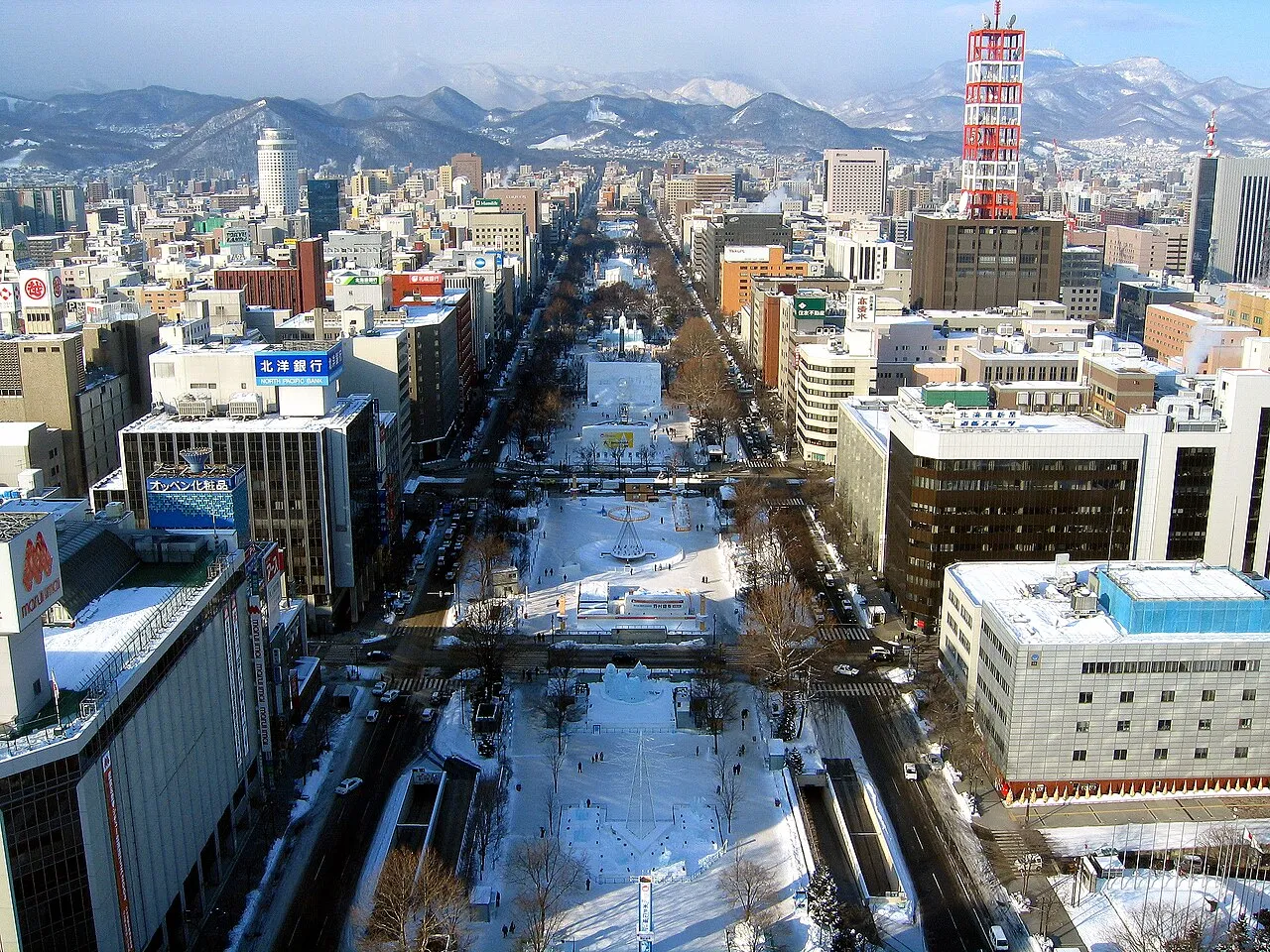
Sapporo was planned in the 19th century on a grid, with streets numbered by blocks north, south, east and west of a central point near the TV Tower. Odori Park, a long strip of green, divides the city’s north and south. Three subway lines — Namboku, Tozai and Toho — cross at Odori, and JR trains run from Sapporo Station to the airport, Otaru and the rest of Hokkaido. In winter, the Chi-Ka-Ho underground walkway and the Pole Town arcade let you walk from Sapporo Station to Susukino without stepping into the snow.
Which area of Sapporo suits me?
| Area | Best for | Getting around | Watch out |
|---|---|---|---|
| Sapporo Station | Airport trains, day trips, shopping | JR lines; Namboku and Toho subway | Business-like; 10–15 min walk to Odori |
| Odori | Sightseeing, the Snow Festival, central location | Namboku, Tozai and Toho lines | Higher prices in February |
| Susukino | Ramen, seafood, bars, nightlife | Namboku line; walk to Odori | Busy and noisy late at night |
| Nakajima Park | Quieter stays, value, a park and concert hall | Namboku line | Further from the station |
| Maruyama | Residential calm, shrine and park, cafés | Tozai line | Few hotels |
| Jozankei Onsen | Hot-spring ryokan, autumn leaves | Bus from central Sapporo, about 1 hour | Limited dining outside ryokan |
Is Sapporo Station a good base?
Yes, especially if you’ll take trains. The JR Rapid Airport reaches New Chitose Airport in about 37 minutes, and trains to Otaru take around 30–40 minutes. The station complex has department stores, restaurants and an observation deck, and underground walkways lead towards Odori. It’s an excellent base for early flights, day trips and travellers moving on to other parts of Hokkaido. The area is quieter in the evenings than Susukino.
Why stay near Odori?
Odori is the heart of Sapporo: the park hosts the Snow Festival in February, a beer garden in summer and the German-style Christmas market and White Illumination in winter. The TV Tower, shopping streets and the historic clock tower are close by, and all three subway lines meet here. For a short first visit, it’s the most balanced choice. See hotels for the Sapporo Snow Festival if you’re visiting in February.
What about Susukino?
Susukino is northern Japan’s largest entertainment district, full of izakaya, ramen alleys, seafood restaurants, karaoke and bars. It’s the place to try Sapporo’s miso ramen, Genghis Khan (grilled lamb) and fresh Hokkaido crab. Hotels range from budget to upscale and are often a little cheaper than in Odori. Some streets are rowdy late at night, so choose a hotel on a quieter side street if you’re a light sleeper. Odori is a ten-minute walk away.
Should I stay in Jozankei or Otaru?
Jozankei Onsen, in a river valley about an hour south-west of central Sapporo by bus, has hot-spring ryokan and is beautiful in autumn and snowy winter. It’s ideal for a night of relaxation, though you’ll eat mostly at your ryokan. Otaru, 30–40 minutes by train, is a charming canal town with glassworks, sushi and old warehouses, and makes a lovely alternative base or day trip.
When are hotels most expensive?
Prices peak during the Snow Festival in early February, when hotels fill months ahead, and in summer (July–August), when visitors escape the heat further south. Ski season brings travellers passing through to Niseko and other resorts. Spring and late autumn are usually the best value. Hokkaido introduced a prefecture-wide accommodation tax in April 2026, and several Hokkaido towns charge their own, so check the tax line on your booking; see Japan tourist taxes explained.
Is Sapporo a good first stop in Japan?
It can be. Sapporo is easier to navigate than Tokyo or Osaka, with a grid layout, fewer crowds and a compact centre, and New Chitose Airport has direct international flights from many Asian cities. It’s an excellent base for Hokkaido’s nature, food and winter sports. If you also want temples and big-city energy, combine it with Tokyo or Kyoto by a short domestic flight. Many travellers spend three or four nights in Sapporo, with day trips to Otaru and an onsen.
How do I get from the airport?
New Chitose Airport is about 45 kilometres from the city. The JR Rapid Airport train runs frequently to Sapporo Station in about 37 minutes; airport buses serve Odori, Susukino and major hotels, taking around 70–80 minutes. In heavy snow, trains are usually more reliable than road transport.
What is Sapporo like through the year?
Sapporo changes dramatically with the seasons. Winter, from December to March, brings deep snow, the White Illumination, the Christmas market and the Snow Festival. Spring arrives late, with cherry blossoms in early May. Summer is mild and dry compared with the rest of Japan, with beer gardens in Odori Park and day trips to the lavender fields of Furano. Autumn brings colourful leaves in Jozankei and Maruyama Park. Each season changes where you’ll spend your time, but the central areas work well year-round.
What should I eat in Sapporo?
Sapporo is one of Japan’s best food cities. Miso ramen was popularised here, and the city has whole alleys of ramen shops. Genghis Khan, lamb grilled on a dome-shaped skillet, is a local speciality, as is soup curry, a spicy broth with vegetables and chicken. Hokkaido seafood — crab, scallops, salmon roe and sea urchin — is excellent at markets such as Nijo Market near Odori. Susukino has the highest concentration of restaurants, but there are good options around the station and Odori too.
What day trips can I take from Sapporo?
Otaru, with its canal and sushi, is 30–40 minutes by train. Jozankei Onsen is about an hour by bus. In summer, Furano and Biei are famous for flower fields; in winter, ski resorts such as Niseko and Rusutsu are within reach. Noboribetsu, a famous hot-spring town, is about 70–90 minutes away. Staying near Sapporo Station makes all of these easier.
Where are these areas?
Markers show the approximate centre of each area. Map data © OpenStreetMap contributors.
Who should stay where?
- First-timers: Odori.
- Rail travellers and early flights: Sapporo Station.
- Food and nightlife: Susukino.
- Budget and calm: Nakajima Park.
- Couples wanting onsen: one night in Jozankei.
- Skiers: a night in Sapporo, then on to the slopes; see where to stay in Niseko.
Notes for families and travellers with access needs
Sapporo’s underground walkways are step-free and a blessing in winter with pushchairs or wheelchairs; choose a hotel with direct access if you can. Above ground, snow and ice make pavements slippery from December to March. Most modern hotels near Sapporo Station and Odori have lifts and accessible rooms.
FAQ
What is the best area to stay in Sapporo?
Odori for sightseeing, Sapporo Station for trains, and Susukino for food and nightlife.
Is Susukino safe to stay in?
Yes, it’s generally safe, though lively and noisy late at night.
How far is Sapporo from New Chitose Airport?
About 37 minutes by the JR Rapid Airport train.
Should I stay in Sapporo or Otaru?
Sapporo for convenience; Otaru for a quieter, scenic stay 30–40 minutes away.
Get new where-to-stay guides by email
One short email when we publish a new city guide. No spam, unsubscribe any time.
We will email you to confirm. See our privacy policy.

We are a small independent team based in Seoul. We compare neighbourhoods using official tourism and transport sources, maps and current guides, and we say clearly when something is research rather than a personal stay. No sponsored placements. About us and how we work.
Sources: Sapporo Travel – official tourism site · Wikipedia – Sapporo · Wikipedia – Sapporo Station · Japan National Tourism Organization – Hokkaido