

Updated 13 November 2026 · By the Donquijotel team
Choosing where to stay in Bangkok can make a huge difference to your trip. The city is vast, traffic is famously heavy, and the main sights — the Grand Palace, Wat Pho and Wat Arun — sit on the river in the old town, far from the modern shopping districts. The trick is to stay near a BTS Skytrain or MRT subway station, or near the river with its express boats, so you can skip the traffic. This guide compares Bangkok’s main areas, from Sukhumvit and Siam to the riverside, Silom, the old town and Chinatown.
Last checked: October 31, 2026. This guide is based on research and comparison of official sources and current travel guides, not a sponsored stay. Transport times and rules change, so check before you go.
Quick answer
- First visit, easy transport: Sukhumvit (around Nana, Asok or Phrom Phong) or Siam.
- Classic riverside: Riverside hotels near Saphan Taksin and the express boats.
- Temples and backpacker life: The old town (Rattanakosin) and Banglamphu, near Khao San Road.
- Food lovers: Chinatown (Yaowarat) or Silom.
- From Suvarnabhumi: Airport Rail Link to Phaya Thai in about 26 minutes, connecting to the BTS.
Table of contents
- How is Bangkok laid out?
- Which area of Bangkok suits me?
- Is Sukhumvit the best area for first-timers?
- Why stay by the river?
- What about the old town and Khao San Road?
- Is Siam good for families?
- Can I take day trips from Bangkok?
- How do I get from the airports?
- When is Bangkok busiest?
- How should I get around day to day?
- What should I look for in a Bangkok hotel location?
- What’s Bangkok’s weather like?
- Who should stay where?
- Notes for families and travellers with access needs
- FAQ
How is Bangkok laid out?
Bangkok spreads east from the Chao Phraya River. The old royal city of Rattanakosin, with the Grand Palace and major temples, lies on a bend of the river in the west. Chinatown sits just south-east of it. Further east are the modern districts: Silom and Sathorn (business and nightlife), Siam (malls), and Sukhumvit (a long road of hotels, restaurants and bars). The BTS Skytrain and MRT subway serve the modern districts well but barely reach the old town, where the river’s express boats and taxis take over.
Which area of Bangkok suits me?
| Area | Best for | Getting around | Watch out |
|---|---|---|---|
| Sukhumvit | First-timers, restaurants, nightlife, wide choice | BTS Sukhumvit line; MRT at Asok/Sukhumvit | Some sois (side streets) are noisy; Nana area is red-light |
| Siam / Ratchaprasong | Shopping, families, central transport | BTS interchange at Siam | Fewer cheap options |
| Silom / Sathorn | Business, rooftop bars, Lumphini Park | BTS Silom line; MRT | Patpong night market area is lively |
| Riverside | Views, boats to the temples, romance | Express boats; BTS at Saphan Taksin | Some hotels need a shuttle boat |
| Old town / Banglamphu | Temples, budget stays, Khao San Road | Boats, taxis; MRT at Sanam Chai | No BTS; traffic in the evening |
| Chinatown (Yaowarat) | Street food, atmosphere | MRT Wat Mangkon | Busy and noisy at night |
| Ari | Local cafés, quieter base | BTS Ari | Further from sights |
Is Sukhumvit the best area for first-timers?
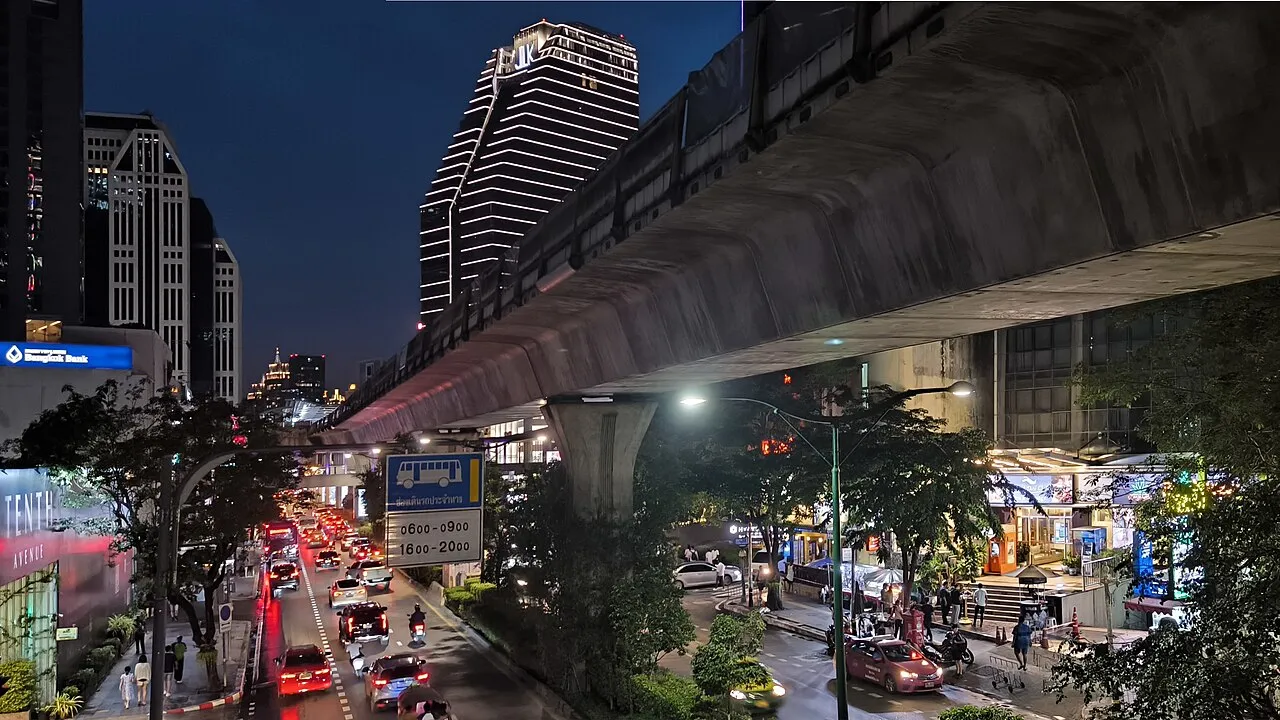
For many visitors, yes. Sukhumvit has the widest range of hotels at every budget, endless restaurants, malls such as those around Asok and Phrom Phong, and the BTS running above the road, with the MRT crossing at Asok. Lower Sukhumvit (around Nana) is lively and includes nightlife areas some travellers prefer to avoid; Asok and Phrom Phong are more balanced; Thong Lo and Ekkamai, further out, are trendy and local. The main downside is distance from the old town’s temples, about 30–60 minutes depending on traffic.
Budget pick: ibis Bangkok Nana
A simple international chain hotel close to Nana BTS station.
Mid-range pick: Grande Centre Point Terminal 21
Above the Terminal 21 mall, linked to Asok BTS and Sukhumvit MRT.
Luxury pick: Sheraton Grande Sukhumvit
A classic five-star by Asok station, with a skywalk to the BTS.
Hotel picks are examples by budget, not sponsored stays. Check recent reviews, the room size and the walk to the station before you book.
Why stay by the river?
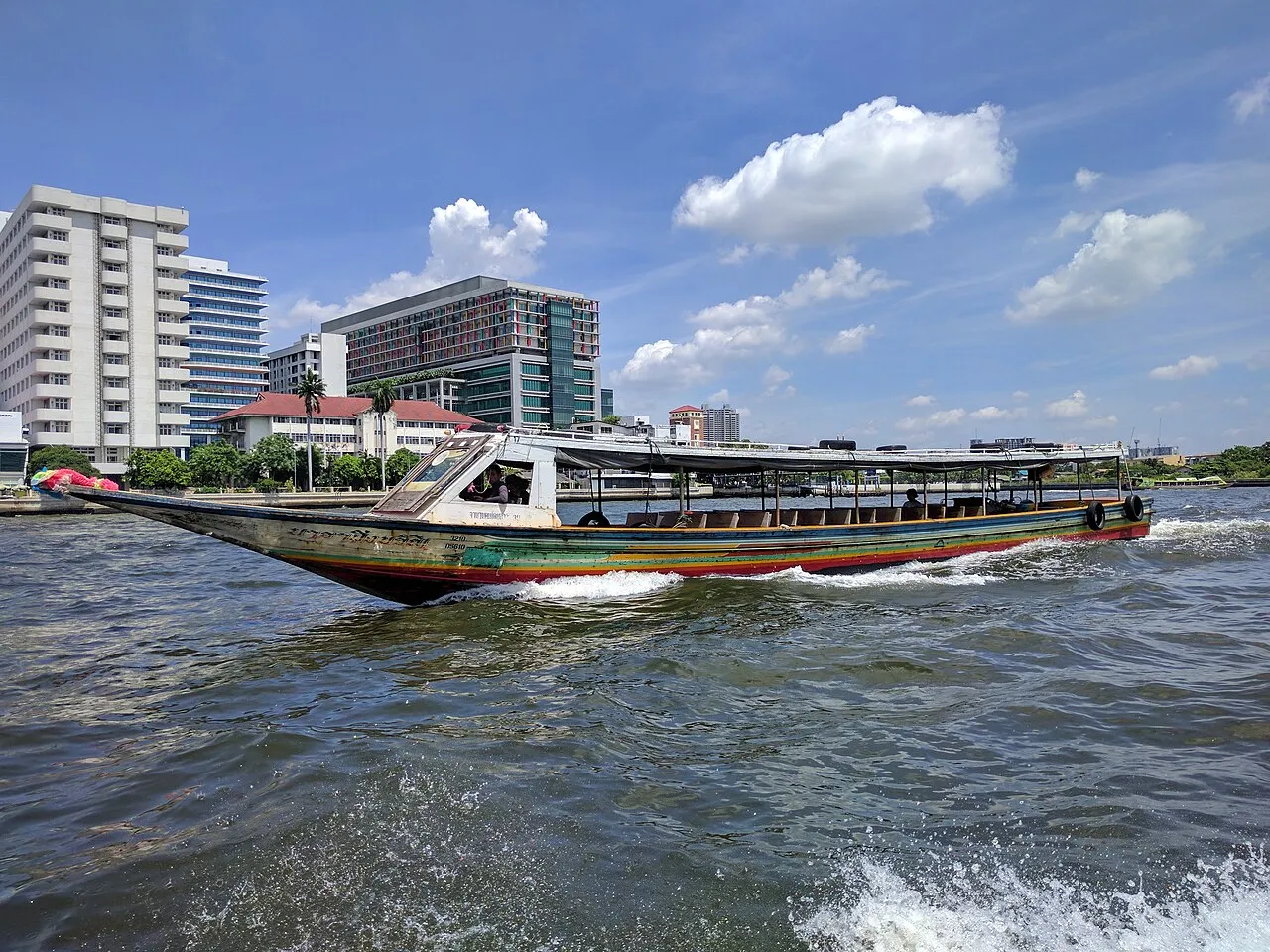
The riverside is Bangkok at its most atmospheric, with views of Wat Arun and long-tail boats. Hotels near Saphan Taksin BTS station connect to the Chao Phraya Express Boat, which stops near the Grand Palace, Wat Pho, Wat Arun and Chinatown — a scenic way to sightsee without traffic. Many riverside hotels run free shuttle boats. It’s a favourite for couples and for travellers focused on the historic sights.
Budget pick: ibis Bangkok Riverside
On the Thonburi bank with river views, using the hotel shuttle boat to the BTS pier.
Mid-range pick: Chatrium Hotel Riverside Bangkok
Large rooms and a river-view pool, with a shuttle boat to Saphan Taksin.
Luxury pick: Mandarin Oriental, Bangkok
Bangkok's most famous riverside hotel, near Saphan Taksin BTS and the Chao Phraya Express boats.
Hotel picks are examples by budget, not sponsored stays. Check recent reviews, the room size and the walk to the station before you book.

What about the old town and Khao San Road?
Banglamphu, around Khao San Road, is Bangkok’s backpacker district, with cheap guesthouses, bars and street food, close to the Grand Palace and temples. The surrounding old-town streets, such as Phra Athit and the area around Democracy Monument, are calmer and full of character. There’s no BTS, but the MRT reaches Sanam Chai near Wat Pho, and boats run from Phra Arthit pier. Expect noise late at night near Khao San Road itself.
Is Siam good for families?
Yes. Siam is Bangkok’s shopping heart, with large malls, an aquarium, cinemas and food courts, all connected by skywalks to the BTS. It’s central for getting anywhere on the BTS, and indoor attractions are a relief from the heat. Hotels tend to be mid-range to upscale.
Budget pick: Lub d Bangkok Siam
A friendly hostel with private rooms opposite National Stadium BTS.
Mid-range pick: Novotel Bangkok on Siam Square
In Siam Square, a short walk from Siam BTS and the big malls.
Luxury pick: Siam Kempinski Hotel Bangkok
A resort-style hotel with a garden pool, connected to Siam Paragon.
Hotel picks are examples by budget, not sponsored stays. Check recent reviews, the room size and the walk to the station before you book.

Feel free to use any of my images
/ Wikimedia Commons, CC BY 4.0Can I take day trips from Bangkok?
Yes. The old capital of Ayutthaya, with its temple ruins, is about one to two hours north by train or road. Floating markets such as Damnoen Saduak and Amphawa are popular half-day trips, and the Maeklong railway market, where vendors pull back their stalls for passing trains, is nearby. Staying near a BTS station or the river makes early departures easier.
How do I get from the airports?
| Airport | Fastest link | Good areas | Watch out |
|---|---|---|---|
| Suvarnabhumi (BKK) | Airport Rail Link to Phaya Thai, about 26 minutes; change to BTS | Sukhumvit, Siam, Ratchaprasong | Taxis take 30–60+ min depending on traffic |
| Don Mueang (DMK) | SRT Red Line to Bang Sue, then MRT | Ari, Chatuchak, Sukhumvit via MRT | Mainly budget airlines |
When is Bangkok busiest?
The cool, dry season from November to February is the most pleasant and popular time, and prices rise around Christmas, New Year and Chinese New Year. Songkran, the Thai New Year water festival in mid-April, is fun but very busy. The rainy season (roughly June to October) brings afternoon downpours and lower prices. New Year’s Eve fireworks along the river make riverside rooms especially sought after; see where to stay for New Year’s Eve.
How should I get around day to day?
Use the BTS and MRT for the modern districts, the Chao Phraya Express Boat for the river and old town, and ride-hailing apps or metered taxis for short hops. Avoid road travel in the evening rush hour if possible. A rechargeable transit card makes the BTS easier, and many lines now accept contactless bank cards.
What should I look for in a Bangkok hotel location?
- Within a few minutes’ walk of a BTS or MRT station — ideally connected by a covered walkway.
- On a quieter soi (side street) rather than directly on a main road, for less noise.
- Near the river and a pier if temples are your focus.
- A pool: Bangkok is hot year-round, and a swim after sightseeing is a joy.
- Check the hotel’s distance to the nearest station on a map, not just its listed area name.
What’s Bangkok’s weather like?
Bangkok is hot all year. The cool season, from November to February, is the most comfortable, with lower humidity and temperatures in the high 20s to low 30s °C. March to May is the hot season, often well above 35°C. The rainy season, roughly June to October, brings heavy afternoon storms that can flood streets briefly, so a hotel close to transport is especially valuable. Light clothes, a hat and an umbrella are essentials, and temples require covered shoulders and knees.
Where are these areas?
Markers show the approximate centre of each area. Map data © OpenStreetMap contributors.
Who should stay where?
- First-timers: Sukhumvit (Asok or Phrom Phong) or Siam.
- Couples: the riverside.
- Families: Siam or Ratchaprasong.
- Backpackers: Banglamphu and the old town.
- Foodies: Chinatown or Silom.
- Business travellers: Silom or Sathorn.
Notes for families and travellers with access needs
Bangkok’s pavements are often uneven, crowded with stalls and interrupted by steps, which can be hard with pushchairs and wheelchairs. Many BTS stations now have lifts, but not every exit. Malls in Siam are step-free and air-conditioned. Hotels connected to a BTS station by skywalk make life much easier, especially in the heat and rain.
If your trip lands on Songkran 2027 (13–15 April), expect water fights in the streets and higher prices in Silom and Khao San.
FAQ
What is the best area to stay in Bangkok for first-timers?
Sukhumvit or Siam, for transport links, food and choice of hotels.
Is it better to stay in Sukhumvit or near the river?
Sukhumvit for convenience and nightlife; the river for views and easy access to the temples.
Is Khao San Road a good place to stay?
For backpackers and nightlife, yes; it’s noisy and far from the BTS.
How do I get from Suvarnabhumi Airport to the city?
Take the Airport Rail Link to Phaya Thai (about 26 minutes), then the BTS.
Is Silom or Sukhumvit better?
Sukhumvit has more hotels and restaurants; Silom is closer to the river and Lumphini Park, with a more business-like feel.
How many nights do I need in Bangkok?
Three or four nights covers the temples, markets and a day trip to Ayutthaya or a floating market.
Get new where-to-stay guides by email
One short email when we publish a new city guide. No spam, unsubscribe any time.
We will email you to confirm. See our privacy policy.

We are a small independent team based in Seoul. We compare neighbourhoods using official tourism and transport sources, maps and current guides, and we say clearly when something is research rather than a personal stay. No sponsored placements. About us and how we work.
Sources: Tourism Authority of Thailand – official site · Wikipedia – Bangkok · Wikipedia – Airport Rail Link · Wikipedia – BTS Skytrain