

Working out where to stay in Osaka on a budget is mostly about choosing the right neighbourhood. Osaka is one of Japan’s best-value big cities: rooms are generally cheaper than in Tokyo or Kyoto, the subway is fast, and a clean, central room close to a station is easy to find if you know where to look. The cheapest beds cluster in a few areas, each with a different feel, from the neon of Namba to quiet business streets and the old working-class districts south of the centre. This guide compares them, explains the types of budget stays you’ll find, and shows how to keep costs down without ending up far from everything.
Last checked: October 30, 2026. This guide is based on research and comparison of official sources and current travel guides, not a sponsored stay. Transport times and rules change, so check before you go.
Quick answer
- Best all-round value: The side streets of Namba and Nippombashi — central, walkable and full of budget options.
- Quiet and good value: Honmachi and Sakaisuji-Hommachi, between Namba and Umeda.
- Cheap with good transport: Tennoji, with JR, subway and airport trains.
- Lowest prices: Capsule hotels and hostels in Namba and Umeda, and the cheapest inns around Shin-Imamiya.
- Before you book: Check the walk to the nearest station and the bed width.
On this page
- Is Osaka a good city for budget travellers?
- Which areas give the best value?
- What kinds of budget stays are there?
- Osaka budget areas compared
- Who should stay where?
- How can I save money on an Osaka stay?
- Is it worth paying more to stay in Namba?
- What should I check before booking?
- Notes for families and travellers with reduced mobility
- FAQ
Is Osaka a good city for budget travellers?
Yes. Osaka has a huge stock of business hotels, hostels, capsule hotels and apartment-style stays, and competition keeps prices reasonable outside peak weeks. Food is famously cheap and good, and the subway’s Midosuji Line links the main areas in minutes, so you don’t need to stay in the most famous street to have an easy trip. The biggest price swings come with the calendar: cherry-blossom season, Golden Week, mid-August, November and major concerts or events can push rates up sharply, while January, June and early December are often quieter.
Which areas give the best value?
Namba’s side streets and Nippombashi. Namba is Osaka’s entertainment heart, and the blocks just away from Dotonbori’s canal hold many simple hotels, hostels and capsules. Nippombashi, one stop east, sits next to Kuromon Market and the electronics and anime shops of Den Den Town. You can walk to Dotonbori in minutes and take the Nankai line straight to Kansai Airport. The trade-off is noise and crowds near the main streets, so ask for a quieter room.
Honmachi and Sakaisuji-Hommachi. This business district sits between Namba and Umeda on several subway lines. In the evening and on weekends it’s calm, and rooms are often cheaper than in Namba for similar quality. Fewer restaurants open on Sundays, but Shinsaibashi’s shops and food are a short ride or a long walk away.
Tennoji and Abeno. Tennoji is a major JR and subway hub with the JR Haruka to Kansai Airport, Tennoji Park and the zoo, and views from the Abeno Harukas tower. Prices are often lower than in Namba or Umeda. Just west, around Shin-Imamiya and Shinsekai, you’ll find some of the cheapest lodgings in the city. The neighbouring Airin area has a long history as a day-labourer district; it’s generally safe but rough around the edges, and some travellers feel uncomfortable there at night, so look at the exact street and recent reviews before booking.
Umeda’s edges. Right next to Osaka Station prices are high, but areas a short walk away, such as Higashi-Umeda, Nakatsu and Fukushima, are cheaper and still close to the trains for day trips to Kyoto and Kobe.
What kinds of budget stays are there?
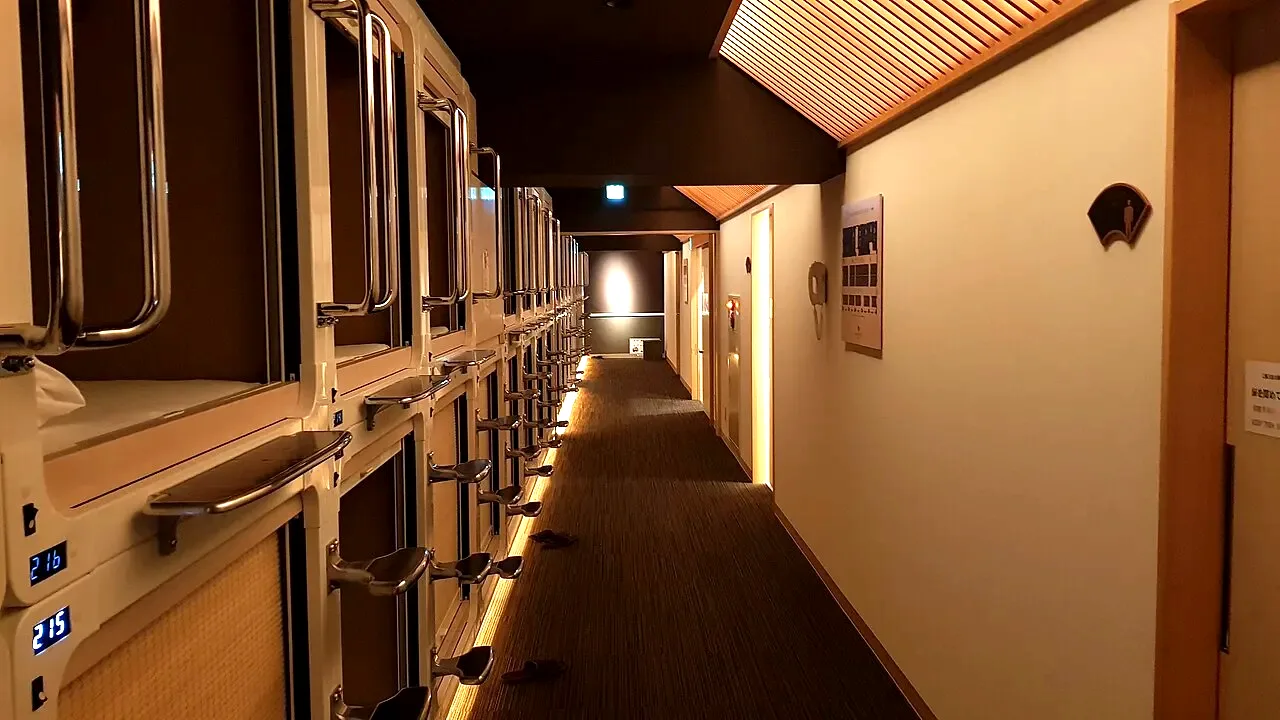
Business hotels are the backbone of budget travel in Japan: compact rooms, often 11–16 m², with a private bathroom, kettle, pyjamas, toiletries and free Wi-Fi. They’re spotless and close to stations, but beds can be narrow; a “semi-double” is usually only about 120–140 cm wide, tight for two adults. Capsule hotels give you a private sleeping pod, a locker and large shared baths; many are men-only or have women-only floors, and big suitcases may need to be left at reception. Hostels offer dorm beds and private rooms with lounges and kitchens. Apartment hotels cost more per night but can be cheaper per person for families and groups, with a kitchen and washing machine. For a side-by-side look, see hostel vs guesthouse vs capsule hotel.
Osaka budget areas compared
| Area | Best for | Getting around | Watch out |
|---|---|---|---|
| Namba side streets | Food, nightlife, first trips | Midosuji Line, Nankai to the airport | Noise near Dotonbori |
| Nippombashi | Markets, shopping, value | Sakaisuji and Sennichimae lines | Small rooms |
| Honmachi / Sakaisuji-Hommachi | Quiet nights, longer stays | Several subway lines | Fewer restaurants on Sundays |
| Tennoji / Abeno | JR access, airport, families | JR, Midosuji Line, Haruka | Check the street west of Shin-Imamiya at night |
| Higashi-Umeda / Nakatsu / Fukushima | Day trips, cheaper than Umeda | Short walk to Umeda’s stations | Busy, confusing stations |
Where are these areas?
Markers show the approximate centre of each area. Map data © OpenStreetMap contributors.
Who should stay where?
- Solo travellers on a tight budget: a capsule hotel or hostel in Namba.
- Couples: a business-hotel double in Honmachi or Nippombashi; check the bed width.
- Families: an apartment hotel or family room near Tennoji or Honmachi.
- Day-trippers to Kyoto and Kobe: the edges of Umeda.
- Early flights from Kansai Airport: Namba or Tennoji, on the airport lines.
For the full picture of each district, read where to stay in Osaka and Namba vs Umeda.
How can I save money on an Osaka stay?
- Book a free-cancellation rate early and check prices again before the deadline; see hotel cancellation policies explained.
- Stay Sunday to Thursday — Friday and Saturday nights usually cost more.
- Compare rates with and without breakfast; convenience-store and café breakfasts are cheap.
- Look one station away from the most famous stop for the same comfort at a lower price.
- Use an IC card such as ICOCA instead of single tickets, and only buy day passes if you’ll use them.
- Compare booking sites and the hotel’s own website: see Booking.com vs Agoda vs Trip.com.
Is it worth paying more to stay in Namba?
Often a little, yes, if it’s your first visit and you’ll be out in the evenings: walking home from Dotonbori saves late-night subway rides, and Namba’s airport trains make arrival and departure simple. On a longer stay, or if you’re happy with a ten-minute subway ride, Honmachi or Tennoji usually gives you a quieter room for less. The difference per night is small compared with the time you save by being close to a station on the Midosuji Line.
What should I check before booking?
Read the room description for size in square metres, bed width and whether there’s a window. Check the walking time to the nearest station on a map, not just the district name, because a “Namba” hotel can be fifteen minutes from the station. Look at check-in times (often 15:00 or later) and whether you can leave luggage before check-in. Finally, Osaka charges an accommodation tax per person per night above a certain room price, usually paid at the hotel, so compare the final total.
Notes for families and travellers with reduced mobility
Budget rooms in Osaka are small, so a family of three or four will usually be more comfortable in an apartment hotel or a dedicated family room than in two standard doubles. Capsule hotels are not suitable for young children and are hard to use with limited mobility because of the climb into upper pods and shared bathrooms. Major stations have lifts, but older budget hotels may have small lifts or steps at the entrance, so check accessibility details and ask the property directly if you need step-free access.
FAQ
What is the cheapest area to stay in Osaka?
The areas around Shin-Imamiya and Shinsekai usually have the lowest prices; Namba’s side streets, Nippombashi, Honmachi and Tennoji offer the best balance of price and convenience.
Is it safe to stay near Shin-Imamiya?
It’s generally safe, but the nearby Airin area is rough around the edges and some travellers feel uncomfortable at night. Check the exact street and recent reviews.
Are capsule hotels good for budget travellers?
Yes for solo travellers with light luggage; they’re cheap, clean and central. They’re not ideal for couples, families or big suitcases.
When are Osaka hotels cheapest?
Often in January, June and early December, and on weeknights outside holidays and big events.
Get new where-to-stay guides by email
One short email when we publish a new city guide. No spam, unsubscribe any time.
We will email you to confirm. See our privacy policy.

We are a small independent team based in Seoul. We compare neighbourhoods using official tourism and transport sources, maps and current guides, and we say clearly when something is research rather than a personal stay. No sponsored placements. About us and how we work.
Sources: Osaka Info – official Osaka travel guide · Wikipedia – Capsule hotel · Wikipedia – Hostel · japan-guide.com – Umeda Sky Building and Umeda area · JR West – official travel information