
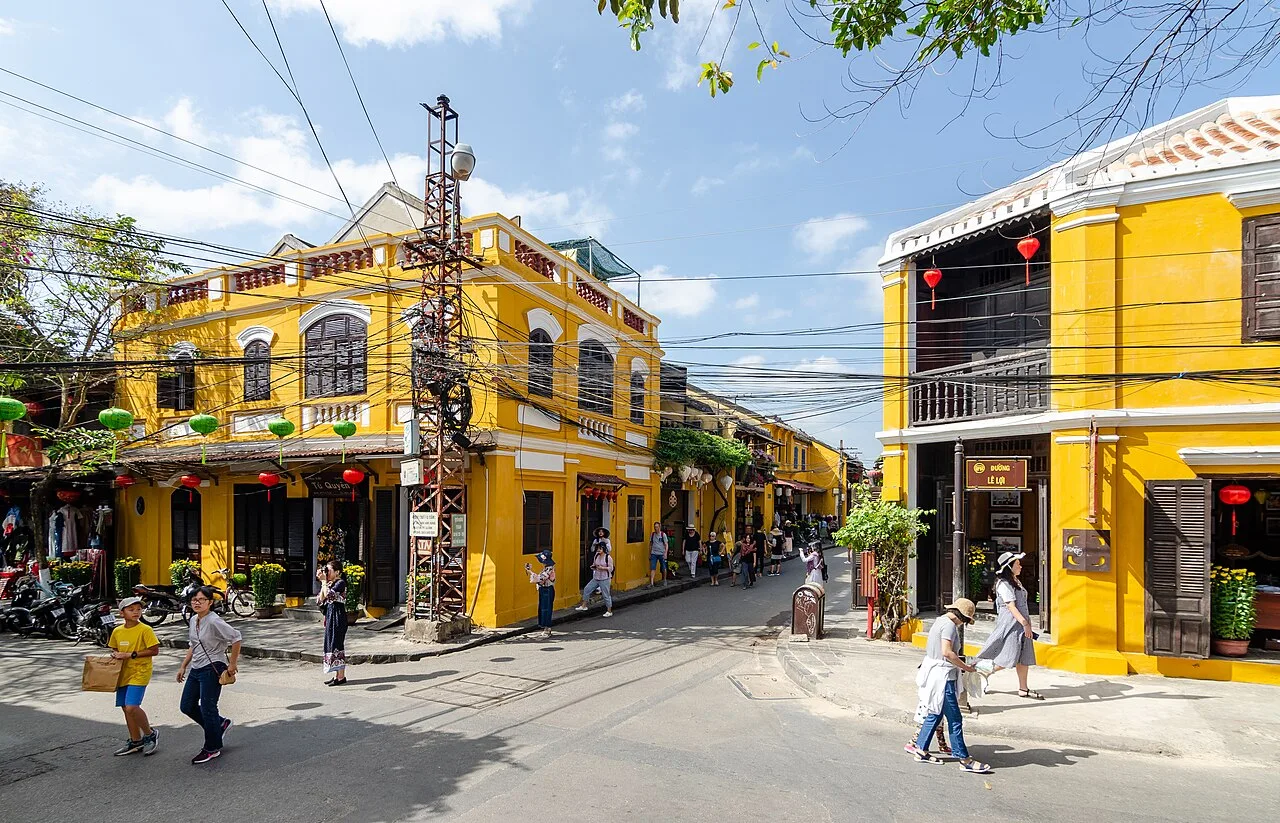
Hoi An or Da Nang: it’s the first decision most travellers make when planning central Vietnam, and the two places feel very different even though they’re only about 30 km apart. Da Nang is a fast-growing coastal city with a long sandy beach, high-rise hotels, big resorts, bridges over the Han River and an international airport minutes from the centre. Hoi An is a small riverside town whose Ancient Town, a UNESCO World Heritage Site since 1999, is a living museum of merchant houses, temples and lantern-lit streets, surrounded by rice fields and with quieter beaches a short ride away. Many people end up staying in both.
Last checked: October 30, 2026. This guide is based on research and comparison of official sources and current travel guides, not a sponsored stay. Transport times and rules change, so check before you go.
Quick answer
- Beach holiday, big pools, nightlife: Da Nang.
- Atmosphere, history, food and slow travel: Hoi An.
- Families with young children: A Da Nang beach base with a day or evening in Hoi An.
- Three nights or fewer: Pick one base and day-trip to the other.
- Five nights or more: Split your stay: two or three nights in each.
On this page
- What is the main difference between Hoi An and Da Nang?
- Why choose Da Nang?
- Why choose Hoi An?
- Hoi An and Da Nang areas compared
- Who should stay where?
- How should I split my stay?
- Does the season change the answer?
- Getting between Hoi An and Da Nang
- Notes for families and travellers with reduced mobility
- FAQ
What is the main difference between Hoi An and Da Nang?
Think of Da Nang as the beach city and Hoi An as the heritage town. In Da Nang you can swim before breakfast, eat seafood on the beach road at night and reach the airport in a short taxi ride. Its attractions are spread out: the Son Tra Peninsula, the Marble Mountains, the riverside bridges and day trips to the Ba Na Hills. In Hoi An, the Ancient Town is compact and best explored on foot, the river comes alive with lanterns and boats in the evening, and the countryside begins within minutes. Hoi An’s beaches, An Bang and Cua Dai, are pleasant but you’ll need a bicycle, scooter or taxi to reach them.

Why choose Da Nang?
Da Nang suits travellers who want the sea to be the centre of the trip. The coastline south of the Son Tra Peninsula, including My Khe beach, runs for kilometres, with lifeguards on the main stretches. Accommodation ranges from simple guesthouses a few streets back from the sand to large resorts with big pools and kids’ clubs on the quieter southern beaches. The city also has the widest choice of restaurants, cafés and bars in the region, and the Han River front is lively in the evening. Because the airport is so close, Da Nang is also the easiest base for short trips and late arrivals.
The trade-off is atmosphere: much of the beachfront is lined with modern towers, and the city can feel more like a resort than a destination with its own character. Most visitors balance this with day trips.
Why choose Hoi An?
Staying in Hoi An lets you see the Ancient Town at its best, early in the morning before day-trip groups arrive and late in the evening when the lanterns are lit. The town is known for its food, including cao lau noodles, banh mi and white rose dumplings, and for its tailors, cooking classes and craft villages. Just outside town, small villas and homestays sit among rice fields and vegetable gardens, often with free bicycles for the ride to the beach. It’s a slower, more personal kind of stay.
A sightseeing ticket is needed to enter the heritage area and visit its historic houses, and parts of the old town are closed to cars at set times. The riverside streets can also flood in the rainy season, so location matters more here than in Da Nang.
Hoi An and Da Nang areas compared
| Area | Best for | Getting around | Watch out |
|---|---|---|---|
| Da Nang – My Khe / An Thuong | Beach, cafés, first visits | Walk the beach road; Grab for longer trips | High-rise, busy in summer |
| Da Nang – Han River centre | City life, markets, short stays | Grab, taxis, walking along the river | Further from the sand |
| Da Nang – Non Nuoc / southern beaches | Big resorts, families | Car or resort shuttle | Quiet evenings away from the resorts |
| Hoi An – Ancient Town edge | History, food, evenings | On foot and by bicycle | Crowds, flooding near the river |
| Hoi An – rice fields (Cam Chau, Tra Que) | Calm, value, cycling | Bicycle or short taxi | Dark roads at night, mosquitoes |
| Hoi An – An Bang beach | Beach plus old town | Bicycle or taxi to town | About 4–5 km from the Ancient Town |
Where are these areas?
Markers show the approximate centre of each area. Map data © OpenStreetMap contributors.
Who should stay where?
- Couples on a romantic trip: two nights in Hoi An for the lanterns and food, then a beach finish in Da Nang. See where to stay in Da Nang for couples.
- Families: a Da Nang beach base, with Hoi An as an afternoon and evening trip. Our Da Nang family guide covers areas and room types.
- First-time visitors on a short trip: one base, chosen by priority: beach (Da Nang) or atmosphere (Hoi An).
- Budget travellers: Hoi An homestays and Da Nang guesthouses near An Thuong both offer good value.
- Food lovers and photographers: Hoi An, ideally near the Ancient Town.
How should I split my stay?
With three nights, choose one base and do the other as a day trip; the drive is about 40–50 minutes. With four or five nights, two nights in Hoi An and two or three in Da Nang works well, and the move takes less than an hour. With a week, you can add the Hai Van Pass towards Hue, the Marble Mountains and a relaxed beach finish. Starting in Hoi An and ending in Da Nang is convenient because the airport is in Da Nang.
Does the season change the answer?
Yes. From roughly February to August the weather is usually warm and drier, and both places are at their best. From about September to December, heavy rain and storms are common: the sea can be rough, beach days are less reliable, and Hoi An’s riverside streets sometimes flood. In those months, a hotel away from the river in Hoi An, or a Da Nang base with indoor facilities, is the safer choice, and flexible bookings are worth the small extra cost. Hoi An’s monthly full-moon evenings, when the town dims its electric lights, are a good reason to stay overnight.
Getting between Hoi An and Da Nang
Ride-hailing cars (Grab), metered taxis and private drivers all make the trip in about 40–50 minutes, and many accommodations can arrange a transfer. Shuttle buses run between the two, and some resorts on Da Nang’s southern beaches offer shuttles to Hoi An. From Da Nang International Airport, Hoi An is about 40–50 minutes by car, while most Da Nang hotels are 10–30 minutes away; see Da Nang Airport to your hotel.
Notes for families and travellers with reduced mobility
Whichever you choose, keep a light day in your plan: the midday heat in central Vietnam is intense for much of the year, and both places are most enjoyable early and late in the day. Da Nang’s beachfront promenades and large hotels are generally easier with a pushchair or wheelchair. Hoi An’s Ancient Town is flat but has uneven pavements, narrow lanes, steps into old houses and dense evening crowds; visiting in the morning is easier. Child car seats are not standard in Vietnamese taxis, so bring a travel seat or book a transfer that provides one. Heat and humidity are strong in summer, so plan sightseeing for mornings and late afternoons.
FAQ
Is it better to stay in Hoi An or Da Nang?
Da Nang for the beach and big resorts, Hoi An for the Ancient Town atmosphere and food. With five nights or more, stay in both.
How far is Hoi An from Da Nang?
About 30 km, roughly 40–50 minutes by car.
Does Hoi An have a beach?
Yes: An Bang and Cua Dai are a short bicycle or taxi ride from the Ancient Town.
When is the best time to visit Hoi An and Da Nang?
Usually February to August; the rainy, stormy season is roughly September to December.
Get new where-to-stay guides by email
One short email when we publish a new city guide. No spam, unsubscribe any time.
We will email you to confirm. See our privacy policy.

We are a small independent team based in Seoul. We compare neighbourhoods using official tourism and transport sources, maps and current guides, and we say clearly when something is research rather than a personal stay. No sponsored placements. About us and how we work.
Sources: Wikipedia – Hoi An · Wikipedia – Da Nang · Vietnam National Authority of Tourism – Vietnam.travel · Da Nang Tourism – official guide · Hoi An Centre for Cultural Heritage Management and Conservation · Wikipedia – Da Nang International Airport