

Updated 10 November 2026 · By the Donquijotel team
| Area | Best for | Getting around | Watch out |
|---|---|---|---|
| Town centre (public baths, river) | First visits, walking, evening strolls | On foot from the station and bus stop | Busy on weekend afternoons |
| Hillsides above town | Views, quiet, larger inns | Shuttles or taxis | Steep walks |
| Near the ropeway station | Arrivals from Mount Rokko | Ropeway, short walk to town | Further from the bus stop |
| Osaka or Kobe (day trip) | Budget, flexible plans | Bus or train | No evening soak |
Arima Onsen is one of Japan’s oldest and most famous hot-spring towns, tucked into the mountains on the north side of Mount Rokko in Kobe. It’s mentioned in some of Japan’s earliest writings, was loved by the sixteenth-century ruler Toyotomi Hideyoshi, and is still prized for two very different kinds of water: the rust-brown kinsen (gold spring) and the clear ginsen (silver spring). The town is small and hilly, with narrow lanes, wooden shops, shrines and traditional inns. It’s an easy day trip from Osaka or Kobe, but a night in a ryokan is the best way to enjoy it. This guide explains how to get there, the springs, where to stay in town, and how to plan a visit.
Last checked: October 30, 2026. This guide is based on research and comparison of official sources and current travel guides, not a sponsored stay. Transport times and rules change, so check before you go.
Quick answer
- From Osaka: Direct express buses from the Umeda area, or trains via Kobe — roughly an hour to an hour and a half.
- From Kobe: Trains or buses from Sannomiya, about 30–40 minutes.
- Public baths: Kin no Yu (gold spring) and Gin no Yu (silver spring).
- Day trip or overnight: An easy day trip; one night in a ryokan is the full experience.
- Scenic route: The Rokko-Arima Ropeway down from Mount Rokko.
Table of contents
- How do I get to Arima Onsen?
- What are kinsen and ginsen?
- Where should I stay in Arima?
- Arima areas compared
- Who should stay overnight?
- Day trip or overnight?
- A simple overnight plan
- What else is there to see in Arima?
- When is the best time to visit?
- How long should I stay?
- Notes for families and travellers with reduced mobility
- Tips
- FAQ
How do I get to Arima Onsen?
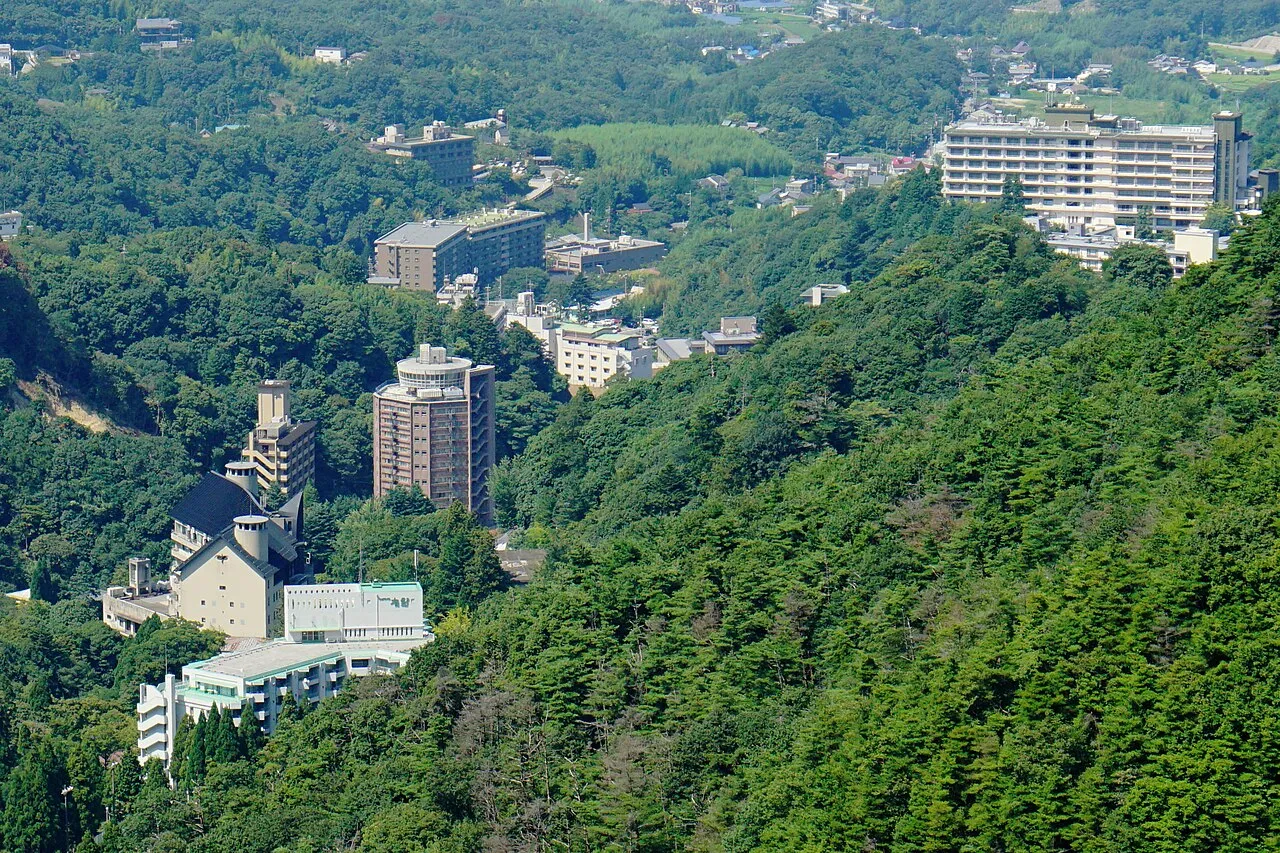
By train, Arima Onsen Station is the terminus of the Shintetsu (Kobe Electric Railway) Arima Line, the highest station on the network. From Kobe’s Sannomiya, connect via the Hokushin line and change at Tanigami; from Osaka, ride to Sannomiya first. By bus, direct express buses run from the Osaka Umeda area and from Sannomiya to Arima, which is the simplest option with luggage. By ropeway, the Rokko-Arima Ropeway links the summit area of Mount Rokko with Arima, a scenic way to combine a mountain visit with the hot springs.
| From | Route | Approximate time |
|---|---|---|
| Osaka (Umeda) | Direct express bus | About 1 hour |
| Osaka | Train to Sannomiya, then Shintetsu via Tanigami | About 1–1.5 hours |
| Kobe (Sannomiya) | Direct bus or train | About 30–40 minutes |
| Mount Rokko | Rokko-Arima Ropeway | A short ride over the mountain |
What are kinsen and ginsen?
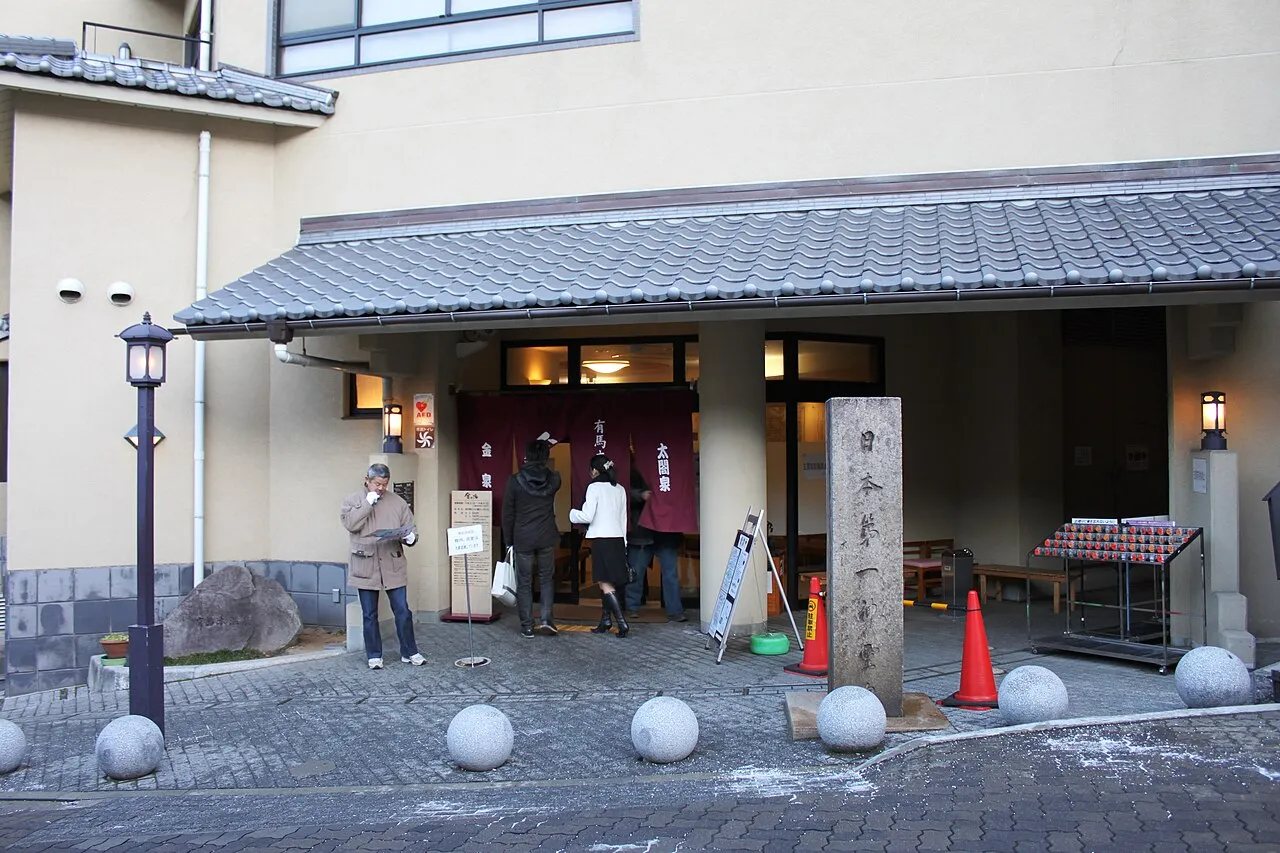
Arima is unusual in having two very different waters in one small town, and trying both is part of the visit. Kinsen, the gold spring, is coloured yellow-brown by iron and salt; it’s thick, salty and famous for leaving a warm glow. It can stain light-coloured towels. Ginsen, the silver spring, is colourless and includes carbonated and radium springs. Arima’s two public baths are named after them: Kin no Yu uses the gold water and Gin no Yu the silver. Many inns offer both, plus private baths that can be reserved.
Where should I stay in Arima?
Arima is compact, but location still matters. The centre, around the public baths, the main shopping lanes and the river, is the most convenient: you can walk to the baths, shops and station, and evening strolls in yukata are part of the fun. The hillsides above town have larger inns and hotels with views over the valley and quieter surroundings, but the walk back is steep; many offer shuttles from the station. Near the ropeway station, at the upper edge of town, is convenient if you arrive from Mount Rokko.
Arima areas compared
| Area | Best for | Getting around | Watch out |
|---|---|---|---|
| Town centre (public baths, river) | First visits, walking, evening strolls | On foot from the station and bus stop | Busy on weekend afternoons |
| Hillsides above town | Views, quiet, larger inns | Shuttles or taxis | Steep walks |
| Near the ropeway station | Arrivals from Mount Rokko | Ropeway, short walk to town | Further from the bus stop |
| Osaka or Kobe (day trip) | Budget, flexible plans | Bus or train | No evening soak |
Where are these areas?
Markers show the approximate centre of each area. Map data © OpenStreetMap contributors.
Who should stay overnight?
- Couples: a ryokan with private baths for a relaxing night.
- First-time ryokan guests: Arima is an easy introduction; see staying in a ryokan for the first time.
- Families: larger inns or hotels with family rooms and private baths.
- Travellers with tattoos: book private or in-room baths.
- Budget travellers: a day trip using the public baths.
Day trip or overnight?
Most visitors from Osaka come for the day, but many wish they had stayed. A day trip is cheap and easy, and the public baths are a great introduction. But Arima is busiest in the middle of the day, and the town’s atmosphere changes completely in the evening, when day visitors leave and guests in yukata wander the lanes. An overnight stay adds a multi-course dinner, evening and morning baths, and quiet streets. Ryokan prices are usually per person with dinner and breakfast, and weekdays are much cheaper than weekends.
A simple overnight plan
- Late morning: express bus from Osaka, or the ropeway down from Mount Rokko.
- Afternoon: walk the lanes, try tansan senbei (crisp crackers made with carbonated spring water), and visit Kin no Yu.
- Mid-afternoon: check in, change into a yukata, and try the inn’s baths.
- Evening: dinner at the inn and another soak.
- Morning: breakfast, a final bath, and back to Osaka or Kobe.
What else is there to see in Arima?
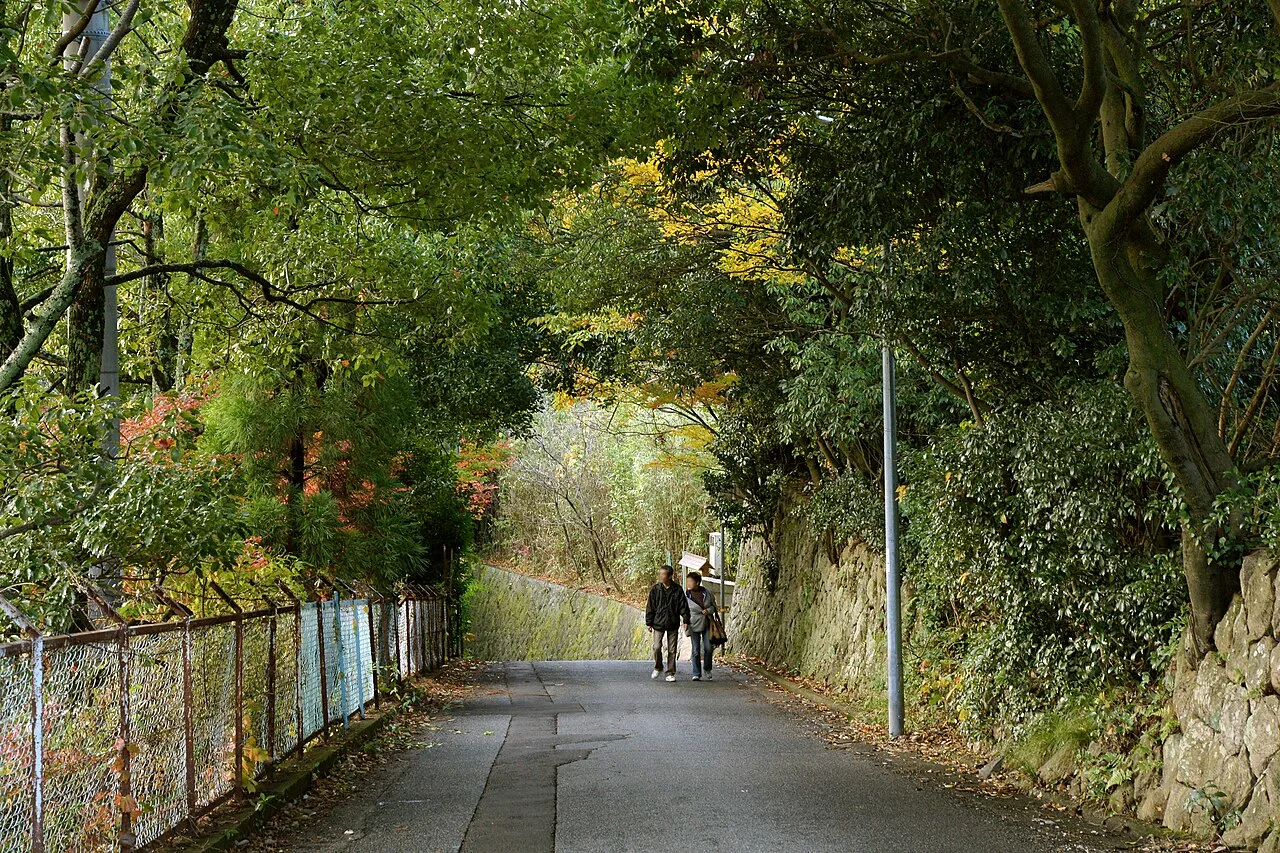
Beyond the baths, Arima’s small lanes are dotted with shrines and temples, including spots linked to Toyotomi Hideyoshi, and springs where you can see the gold water bubbling up, steaming and stained orange. Shops sell traditional brushes with tiny dolls in the handles, local crafts and sweets, and cafés serve drinks made with carbonated spring water. In autumn, the maples along the stream turn red, and the nearby park and walking paths are pleasant for a short hike. Combining Arima with Mount Rokko’s viewpoints and the ropeway makes a full, scenic day.
When is the best time to visit?
Autumn, when the maples around town and on Mount Rokko turn red, is the most popular season, followed by winter, when a hot soak is most welcome. Spring brings cherry blossoms. Summer is cooler than central Osaka and quieter outside holiday weeks. Weekends and holidays are busy everywhere; a weekday visit is much more relaxed. The public baths close on certain days each month, so check the schedule before you go.
How long should I stay?
One night is enough for most visitors: arrive after lunch, enjoy the baths and dinner, and leave after breakfast. Two nights let you add Mount Rokko, a longer walk around the area or a visit to Kobe’s harbour and Kitano district without rushing. Arima also pairs well with a Kobe or Osaka base, as an overnight break in the middle of a longer stay.
Notes for families and travellers with reduced mobility
Plan your route through town before you arrive. Arima is built on steep slopes with narrow lanes and steps, which can be hard with a wheelchair or pushchair; the direct bus drops you closer to the centre than the train. Larger hotels on the hillsides often have lifts and shuttles. Children usually enjoy the baths in short, supervised soaks. If you have mobility needs, ask the inn about step-free routes, lifts and private baths before booking.
Tips
A few practical points make an Arima visit smoother, especially on a first trip or with luggage.
- Bring a towel you don’t mind staining if you use the gold spring.
- Send large luggage ahead or leave it at a station locker in Osaka or Kobe.
- Book weekend and autumn stays early.
- Combining Kansai bases? See Osaka or Kyoto.
FAQ
How far is Arima Onsen from Osaka?
About an hour by direct express bus from the Umeda area, or an hour to an hour and a half by train via Kobe.
Is Arima Onsen worth staying overnight?
Yes, if you want the full ryokan experience with dinner and evening baths; otherwise it’s an easy day trip.
What is the gold spring at Arima?
Kinsen, a yellow-brown hot spring coloured by iron and salt — Arima’s most famous water.
Can I visit Arima from Mount Rokko?
Yes, the Rokko-Arima Ropeway links the Mount Rokko area with Arima Onsen.
Get new where-to-stay guides by email
One short email when we publish a new city guide. No spam, unsubscribe any time.
We will email you to confirm. See our privacy policy.

We are a small independent team based in Seoul. We compare neighbourhoods using official tourism and transport sources, maps and current guides, and we say clearly when something is research rather than a personal stay. No sponsored placements. About us and how we work.
Sources: Wikipedia – Arima Onsen · Arima Onsen Tourism Association · Feel Kobe – official Kobe tourism guide · Wikipedia – Arima Onsen Station · Wikipedia – Rokko-Arima Ropeway