
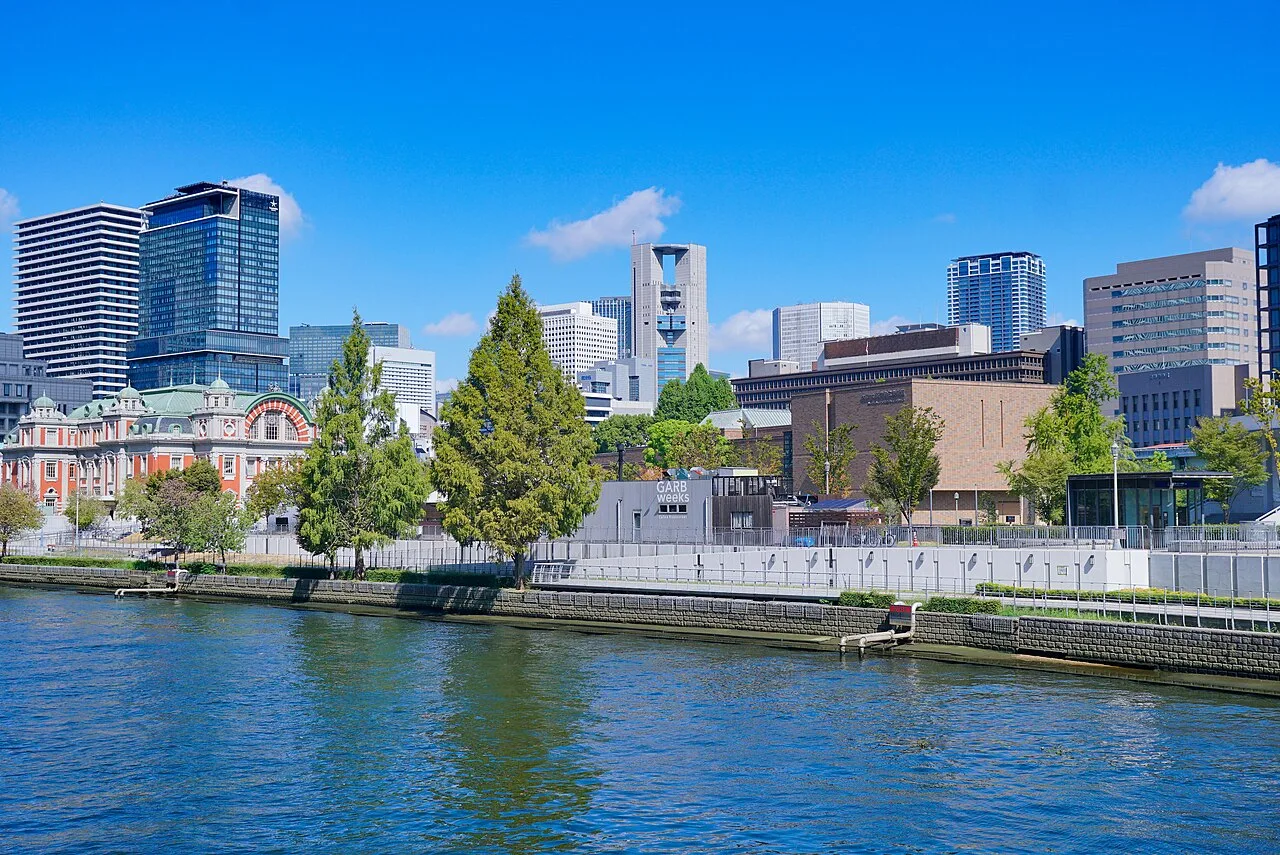
Choosing where to stay in Osaka for luxury is mostly a choice of setting. The city’s top-end hotels are concentrated in a few districts, each with a different character: glass towers and new parks around Osaka Station, a river island of museums and old stone bridges, an elegant tree-lined boulevard, a designer shopping street, and the high floors of Japan’s second-tallest skyscraper. Where you stay decides whether you wake up to river views or the city skyline, whether you walk to fine dining or to street food, and how easily you reach Kyoto, Kobe or the airport. This guide compares the areas so you can choose before comparing individual properties.
Last checked: October 30, 2026. This guide is based on research and comparison of official sources and current travel guides, not a sponsored stay. Transport times and rules change, so check before you go.
Quick answer
- Newest and most connected: Umeda, around Osaka Station and the Grand Green Osaka park.
- Calm, river views and culture: Nakanoshima.
- Central and refined: Along Midosuji avenue in Yodoyabashi, Honmachi and Kitahama.
- Shopping and nightlife: Shinsaibashi.
- Sky-high views and the airport line: Tennoji and Abeno, or above Namba Station.
On this page
- What does a luxury stay in Osaka look like?
- Why stay in Umeda?
- Why stay in Nakanoshima?
- What about Midosuji, Shinsaibashi and Namba?
- Is Tennoji worth considering?
- Osaka luxury areas compared
- Who should stay where?
- Where can I eat well near each area?
- How many nights should I plan?
- When are luxury rates lowest?
- What should I check before booking?
- Is a luxury stay in Osaka better value than Tokyo or Kyoto?
- Notes for families and travellers with reduced mobility
- FAQ
What does a luxury stay in Osaka look like?
Luxury in Osaka tends to be modern rather than traditional. Osaka’s luxury hotels are usually in towers, with lobbies and rooms on the upper floors, so views are a big part of the experience. Expect large rooms by Japanese standards, deep bathtubs with city views, spas, club lounges, several restaurants and bars, and polished, attentive service. Rates are often lower than for comparable stays in Tokyo, especially in winter and early summer. The newest openings in recent years have clustered around Osaka Station, where a large redevelopment, including the Grand Green Osaka park, has transformed the north side of Umeda.

Why stay in Umeda?
Umeda, the district around Osaka Station, is Osaka’s main transport and business hub. JR, Hankyu, Hanshin and three subway lines meet here, so Kyoto, Kobe, Nara and Universal Studios Japan are all easy day trips, and airport buses leave from the station area. The district is packed with department stores, luxury boutiques and restaurant floors, and the Grand Green Osaka park, most of which opened in September 2024, adds green space beside the station. Luxury hotels here occupy the upper floors of new towers, with sweeping views. The trade-off is scale: the stations and underground passages are huge and confusing, and the streets are busy.
Why stay in Nakanoshima?
Nakanoshima is a narrow island about three kilometres long between two rivers, just south of Umeda. It’s home to Osaka’s city hall, the Nakanoshima Museum of Art, the National Museum of Art, the Osaka City Central Public Hall and riverside promenades. Hotels here offer calmer surroundings and river views while staying within walking distance of Umeda and Kitashinchi, the city’s upscale dining district. It’s a good choice for couples and travellers who prefer culture and quiet evenings to shopping.
What about Midosuji, Shinsaibashi and Namba?
Midosuji is Osaka’s grand ginkgo-lined boulevard, running north–south between Umeda and Namba. The stretch through Yodoyabashi, Kitahama and Honmachi is a quieter, central business district with elegant hotels, close to the Midosuji subway line. Shinsaibashi, further south, is the city’s luxury shopping street, with flagship stores along Midosuji and the busy Shinsaibashi-suji arcade; hotels here suit travellers who want design, bars and nightlife. Namba is the food and entertainment centre, with Nankai trains to Kansai Airport underneath; staying above or beside the station makes early flights easy.
Is Tennoji worth considering?
Yes, for views. Abeno Harukas, the 300-metre skyscraper above Osaka Abenobashi and Tennoji stations, was Japan’s tallest building until 2023, and its upper floors include a hotel and an observation deck. Tennoji also has the JR Haruka to Kansai Airport, Tennoji Park and the zoo. The area feels more local and less polished than Umeda, which some travellers prefer.
Osaka luxury areas compared
| Area | Best for | Getting around | Watch out |
|---|---|---|---|
| Umeda | Newest hotels, shopping, day trips | JR, Hankyu, Hanshin, three subway lines | Huge, confusing stations |
| Nakanoshima | River views, museums, calm evenings | Keihan Nakanoshima Line, walk to Umeda | Fewer late-night options |
| Midosuji (Yodoyabashi / Honmachi) | Central, refined, business trips | Midosuji subway line | Quiet at weekends |
| Shinsaibashi | Luxury shopping, design, nightlife | Midosuji and Nagahori Tsurumi-ryokuchi lines | Crowds in the arcades |
| Namba | Food, airport trains | Nankai, Midosuji Line | Busy, noisy streets |
| Tennoji / Abeno | Sky-high views, JR Haruka | JR, Midosuji Line, Kintetsu | Less polished surroundings |
Where are these areas?
Markers show the approximate centre of each area. Map data © OpenStreetMap contributors.
Who should stay where?
- Couples and special occasions: Nakanoshima or a high floor in Umeda.
- Shoppers: Umeda or Shinsaibashi.
- Business travellers: Umeda or Midosuji.
- Families: Umeda, for larger rooms and easy trains; see where to stay in Osaka with kids.
- Early flights from Kansai Airport: Namba or Tennoji.
Where can I eat well near each area?
Kitashinchi, just south of Umeda and a short walk from Nakanoshima, is Osaka’s most exclusive dining district, packed with small high-end restaurants, sushi counters and bars. Umeda’s department stores and new towers have restaurant floors with skyline views. Around Shinsaibashi and Namba, you’re close to Dotonbori’s street food and Kuromon Market as well as stylish bars. Many luxury hotels also have well-regarded restaurants of their own, which is convenient on a first night or a rainy evening.
How many nights should I plan?
Luxury stays reward slowing down: leave time to use the spa, the pool or the lounge rather than treating the hotel only as a place to sleep. Two or three nights are enough to enjoy the hotel, the food and the main sights. With four or more, a high-end Osaka base works well for day trips to Kyoto, Nara and Kobe, returning each evening to the same room. If you want a traditional experience as well, add one night in a ryokan in Kyoto or a hot-spring town; see staying in a ryokan for the first time.
When are luxury rates lowest?
Prices are usually lowest from January to early March (outside Lunar New Year), in June during the rainy season, and in early December. Cherry-blossom season, Golden Week, mid-August and November are the most expensive, and the best rooms sell out early. Look for packages that include breakfast, club lounge access or late check-out, which can add a lot of value, and compare the hotel’s own website with booking sites; see Booking.com vs Agoda vs Trip.com.
What should I check before booking?
- Which floors the rooms are on, and which direction the views face.
- Whether breakfast, lounge access, spa or pool use are included.
- The walk from the hotel entrance to your main station exit — towers can have separate lobbies.
- Osaka’s accommodation tax, added per person per night above a set room price.
- The cancellation policy, especially for peak dates; see hotel cancellation policies explained.
Is a luxury stay in Osaka better value than Tokyo or Kyoto?
Often, yes. Osaka has a growing supply of top-end rooms, and rates for similar categories are frequently lower than in Tokyo, and much lower than in Kyoto during peak seasons. Many travellers base themselves in a high-end Osaka hotel and visit Kyoto by train, which is around 15–30 minutes from Umeda or Shin-Osaka; see Osaka or Kyoto.
Notes for families and travellers with reduced mobility
New luxury hotels generally have the best accessible rooms, with step-free entrances, roll-in showers and wide doors; ask the hotel about specific features. Umeda’s underground network is mostly step-free but long. Families should ask about connecting rooms, extra beds and children’s amenities, which many high-end hotels offer on request.
FAQ
What is the best area in Osaka for a luxury stay?
Umeda has the newest high-end hotels and the best transport; Nakanoshima is quieter, with river views.
Are Osaka luxury hotels cheaper than Tokyo?
Usually, for similar room types, especially outside peak seasons.
Which Osaka area has the best views?
High floors in Umeda towers and Abeno Harukas in Tennoji offer the widest city views.
Where should I stay for shopping?
Umeda for department stores and Shinsaibashi for flagship boutiques on Midosuji.
Get new where-to-stay guides by email
One short email when we publish a new city guide. No spam, unsubscribe any time.
We will email you to confirm. See our privacy policy.

We are a small independent team based in Seoul. We compare neighbourhoods using official tourism and transport sources, maps and current guides, and we say clearly when something is research rather than a personal stay. No sponsored placements. About us and how we work.
Sources: Osaka Info – official Osaka travel guide · Wikipedia – Umeda · Wikipedia – Grand Green Osaka · Wikipedia – Nakanoshima · Wikipedia – Midosuji · Wikipedia – Abeno Harukas