

Working out where to stay in Tokyo for Christmas is mostly about the lights. Tokyo doesn’t close for Christmas — it isn’t a public holiday in Japan — but from early November the city’s business districts compete with huge LED displays, and Christmas Eve is one of the busiest date nights of the year. Pick a base near the illuminations you care about and you can walk out to them every evening instead of fighting crowded trains. This guide matches each major illumination area with the neighbourhoods that suit it, and explains how this season differs from New Year in Tokyo.
Last checked: November 2, 2026. This guide is based on research and comparison of official sources and current travel guides, not a sponsored stay. Transport times and rules change, so check before you go.
Quick answer
- Best all-round base: Marunouchi / Tokyo Station — the long Naka-dori illumination is on your doorstep and trains go everywhere.
- For the most famous lights: Roppongi, for the Keyakizaka avenue and its view of Tokyo Tower.
- For shopping and couples: Omotesando or Shibuya, close to the Omotesando and Harajuku displays.
- Better value: Ginza edge, Hamamatsucho or Ueno — all a short ride from the lights.
- Book by: October for 23–25 December; Christmas Eve fills first.
On this page
- How does Christmas work in Tokyo?
- Where can I see the Tokyo Christmas illuminations?
- Is Roppongi the best place to see Tokyo Christmas lights?
- Why stay in Marunouchi for Christmas?
- Where to see Christmas lights in Tokyo if you’re on a budget?
- Is Christmas Eve really that busy?
- How does this differ from staying for New Year?
- What’s the weather like?
- How do I get in from the airports?
- What should I check before booking?
- Who should stay where?
- Notes for families and travellers with access needs
- FAQ
How does Christmas work in Tokyo?
Christmas in Japan is a seasonal celebration rather than a religious or family holiday for most people. Offices and shops stay open on 25 December, which falls on a Friday in 2026, and trains run to their normal weekday timetable. What changes is the evenings: couples book restaurants and hotel rooms for Christmas Eve, families order Christmas cake, and the big illumination events peak in the last week before the 25th. Most Christmas-themed lights switch off or change theme on 26 December, while the New Year decorations go up almost overnight. If you want both seasons, see our separate guide to staying in Tokyo for New Year.
Where can I see the Tokyo Christmas illuminations?
The Tokyo Christmas illuminations are spread across several business districts, each run by a different developer. Dates below are the 2026 announcements where they exist; others are based on previous years, so check before you book.
| Area | Best for | Getting around | Watch out |
|---|---|---|---|
| Marunouchi / Tokyo Station | Long champagne-gold avenue of trees on Naka-dori; Marunouchi Illumination runs 12 Nov 2026 – 14 Feb 2027 | JR lines, Marunouchi Line, Narita Express | Quiet at weekends; business-hotel feel |
| Roppongi Hills / Tokyo Midtown | Keyakizaka Illumination (5 Nov – 25 Dec 2026) with Tokyo Tower views; Christmas market | Hibiya and Oedo lines | The most crowded viewing spot on 24 Dec |
| Omotesando / Harajuku | Zelkova-lined avenue, boutiques, Omotesando Hills tree (previous years) | Ginza, Chiyoda and Hanzomon lines | Few hotels on the avenue itself |
| Shiodome / Shimbashi | Caretta Shiodome’s show-style display (previous years) | JR, Yurikamome, Ginza and Asakusa lines | Area is quiet late at night |
| Ebisu | Yebisu Garden Place’s giant Baccarat chandelier (previous years) | JR Yamanote, Hibiya Line | Busy on weekend evenings |
| Toyosu / Shiba Park | Tokyo Christmas Market 2026 (Shin-Toyosu 20 Nov – 25 Dec; Shiba Park 4–25 Dec) | Yurikamome; Oedo and Mita lines | Ticketed entry has applied in past years |
Is Roppongi the best place to see Tokyo Christmas lights?
For many visitors, the Tokyo Christmas lights in Roppongi are the picture they have in mind: Keyakizaka-dori, a sloping street of zelkova trees wrapped in white and blue LEDs, with Tokyo Tower glowing at the bottom. For 2026, Roppongi Hills lists the Keyakizaka Illumination from 5 November to 25 December, lit every evening, and its Christmas market from 21 November. Tokyo Midtown, a ten-minute walk away, has run its own lawn illumination in previous years. Staying in Roppongi means you can see the lights late, after the crowds thin, and the area is full of restaurants that stay open past midnight. The trade-offs are nightlife noise on side streets and higher room rates in December. Azabudai Hills, between Roppongi and Kamiyacho, has added another Christmas market nearby, so hotels around Kamiyacho Station also work well.
Why stay in Marunouchi for Christmas?
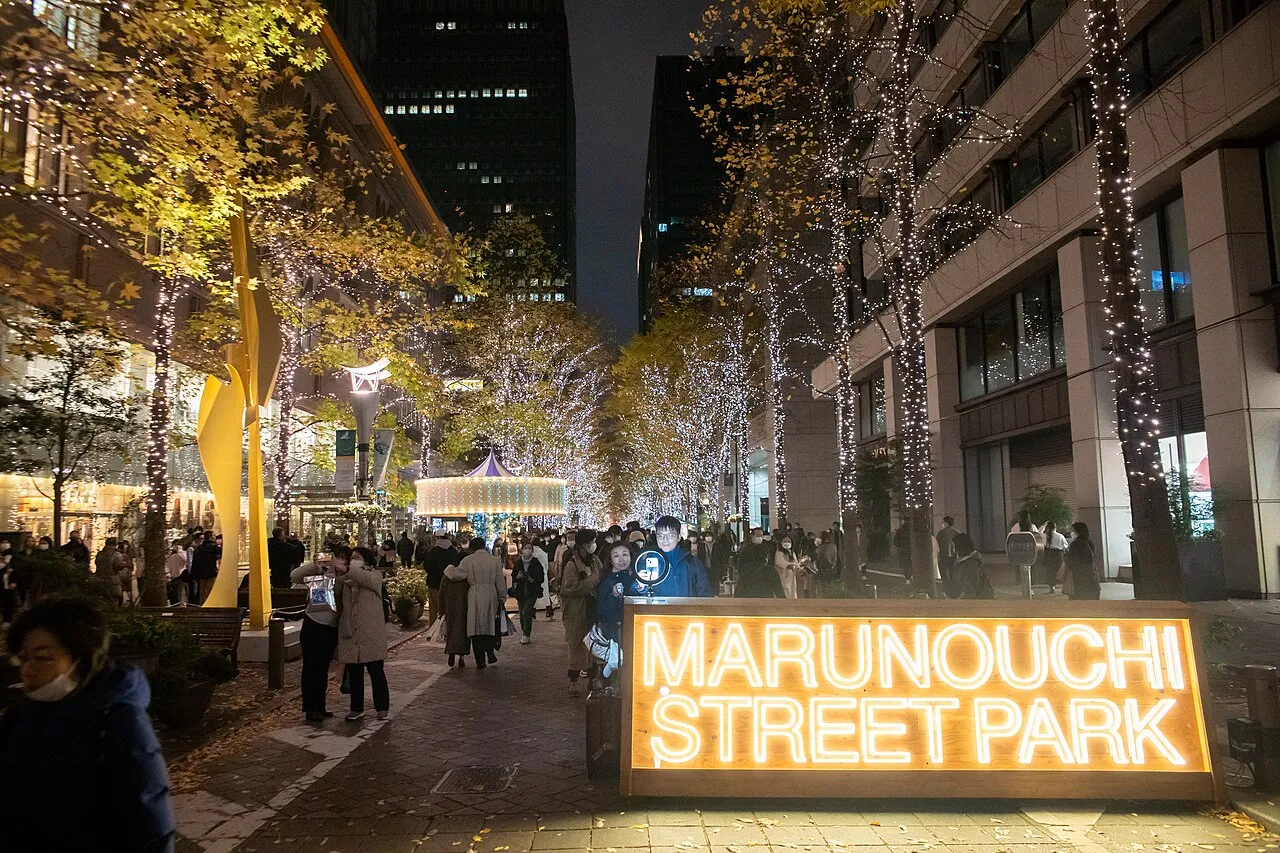
Marunouchi is the practical choice. The 1.2-kilometre Naka-dori avenue is lit in warm gold from mid-November, Tokyo Station’s red-brick facade is illuminated at night, and the Marunouchi Building and KITTE usually put up large Christmas trees. Because the illumination continues into February, the area stays pretty after Christmas too. Tokyo Station connects you to the Narita Express, the shinkansen and most JR lines, so it’s easy to fit in day trips. It’s also calm: once offices empty out, the streets are quiet, which suits families and anyone who wants an early night. Ginza, with its department-store displays, is a 10–15 minute walk away.
Where to see Christmas lights in Tokyo if you’re on a budget?
If you’re asking where to see Christmas lights in Tokyo without paying peak Roppongi prices, look at areas one or two stops away. Hamamatsucho and Shimbashi put you a short walk from Shiodome and Shiba Park, near the Tokyo Tower end of the city. Ueno and Asakusa are cheaper, with the Ginza Line running directly to Ginza and Omotesando. Shinagawa has lots of large business hotels and quick airport access, with Roppongi and Ebisu 15–20 minutes away. You’ll spend a little longer on trains, but the illuminations are free to view and open until late, so you can still see two areas in an evening.
Is Christmas Eve really that busy?
Yes. On 24 December, restaurants in Roppongi, Ginza, Omotesando and Odaiba are booked weeks ahead, and couples fill hotel rooms with city views. Keyakizaka often has staff directing foot traffic. In 2026, Christmas Eve is a Thursday and Christmas Day a Friday, so the following weekend will be busy too. If your dates are flexible, visit the lights between Monday and Wednesday of that week — the displays are the same and the pavements are much easier.
How does this differ from staying for New Year?
Christmas is about the business districts and their illuminations; New Year is about shrines, temples and family traditions. For New Year, areas near Meiji Jingu, Senso-ji and Shibuya make sense, and some shops and restaurants close on 1–3 January. For Christmas, everything is open and the lights cluster around Marunouchi, Roppongi, Omotesando and Shiodome. If you’re staying through both, a central base on the Yamanote or Hibiya lines is the easiest compromise.
What’s the weather like?
December in Tokyo is usually dry and sunny, with daytime temperatures around 10–12°C and evenings close to 5°C. Snow is rare. You’ll be standing outside for illuminations, so a warm coat and gloves are enough; heavy winter gear isn’t needed.
How do I get in from the airports?
From Narita, the Narita Express reaches Tokyo Station in about an hour and continues to Shinagawa and Shibuya; the Keisei Skyliner is quicker to Ueno. From Haneda, the Tokyo Monorail runs to Hamamatsucho and the Keikyu Line to Shinagawa, each in well under half an hour, and limousine buses serve many hotel areas. In late December, airport buses can be slowed by evening traffic, so trains are more predictable.
What should I check before booking?
- Walking distance to the illumination you care about most, not just to a station.
- Whether a ‘view’ room faces the lights or just the city — read the room description carefully.
- Room size: standard Tokyo double rooms are small; families should check for twin or triple rooms.
- Free cancellation, since Christmas Eve rates often require prepayment.
- Accommodation tax: Tokyo adds a small per-person, per-night charge on most rooms — see Japan tourist taxes.
Where are these areas?
Markers show the approximate centre of each area. Map data © OpenStreetMap contributors.
Who should stay where?
- First-timers: Marunouchi / Tokyo Station or Ginza.
- Couples: Roppongi or Omotesando for the most romantic lights.
- Families: Marunouchi or Shinagawa — calm evenings, easy trains, larger hotels.
- Budget travellers: Ueno, Asakusa or Hamamatsucho.
- Christmas market fans: Roppongi or Kamiyacho, or near Toyosu for the Tokyo Christmas Market.
Notes for families and travellers with access needs
Major stations have lifts, but large ones such as Tokyo and Shinjuku involve long walks; ask staff for the nearest lift exit. Keyakizaka is a slope with crowds on weekend evenings, so a pushchair is easier on a weekday. Marunouchi’s Naka-dori is flat and wide, which makes it the most comfortable illumination for wheelchairs and young children.
FAQ
Where should I stay in Tokyo for Christmas?
Marunouchi for convenience and calm, Roppongi for the famous Keyakizaka lights, Omotesando for shopping and couples.
When are the Tokyo Christmas illuminations on?
Most run from early or mid-November to 25 December; Marunouchi’s runs until 14 February 2027.
Are Tokyo Christmas lights in Roppongi free?
Yes, viewing the Keyakizaka Illumination is free. It runs 5 November to 25 December 2026.
Is Christmas a holiday in Japan?
No. Shops, attractions and trains run normally on 25 December.
Is the Tokyo Christmas Market still in Hibiya?
Not in 2026: it’s listed at Shin-Toyosu (20 Nov – 25 Dec) and Shiba Park (4–25 Dec).
Get new where-to-stay guides by email
One short email when we publish a new city guide. No spam, unsubscribe any time.
We will email you to confirm. See our privacy policy.

We are a small independent team based in Seoul. We compare neighbourhoods using official tourism and transport sources, maps and current guides, and we say clearly when something is research rather than a personal stay. No sponsored placements. About us and how we work.
Sources: GO TOKYO – official Tokyo travel guide · Roppongi Hills – Christmas 2026 · Marunouchi.com – Marunouchi Illumination · Japan National Tourism Organization · Wikipedia – Christmas in Japan