
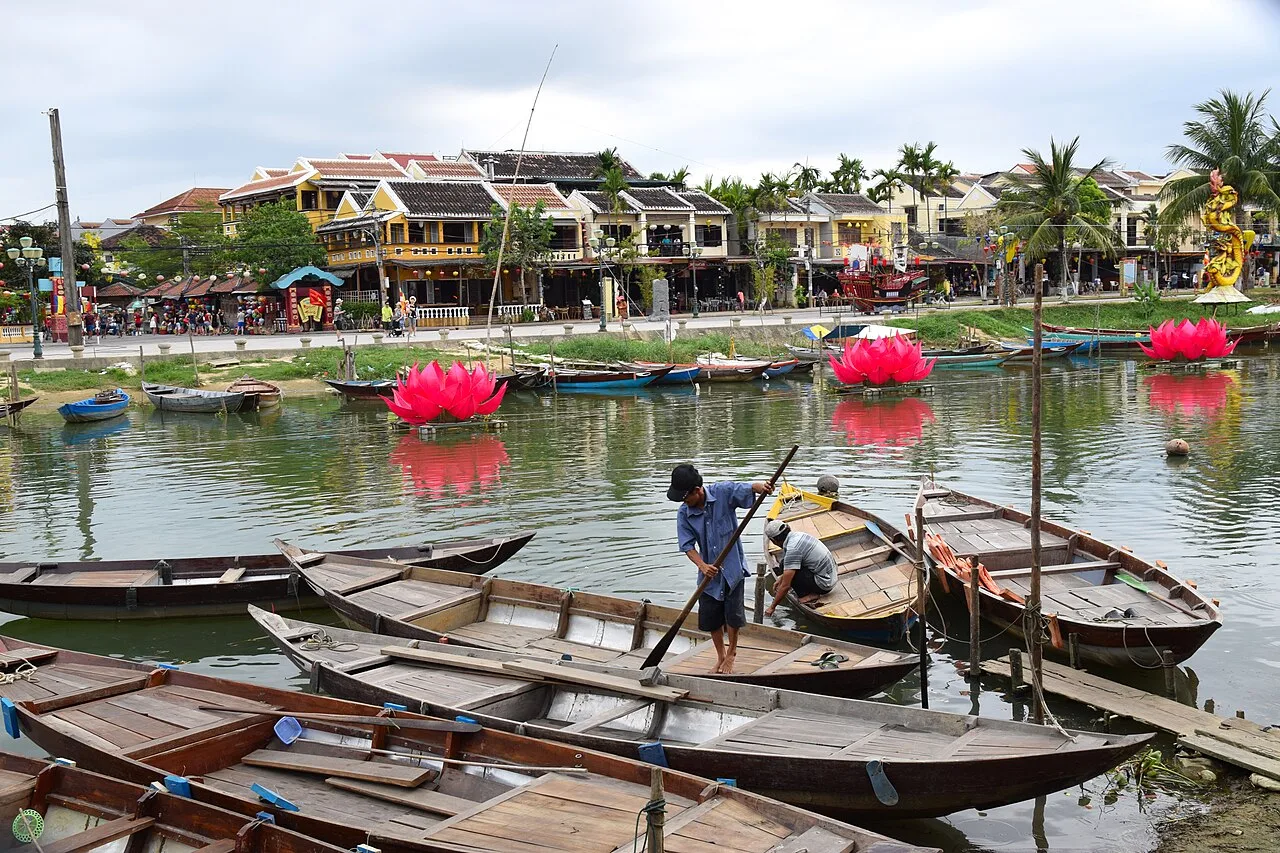
Choosing where to stay in Hoi An shapes the whole trip. This small town on the Thu Bon River, in central Vietnam, is built around an Ancient Town of yellow merchant houses, wooden shophouses, temples and assembly halls that has been a UNESCO World Heritage Site since 1999. Around it are quieter riverside neighbourhoods, rice fields and vegetable villages, and two beaches a few kilometres away. You can wake up steps from the lantern-lit streets, among the paddies with a bicycle at the door, or a short walk from the sea. This guide compares each area and explains who it suits.
Last checked: October 30, 2026. This guide is based on research and comparison of official sources and current travel guides, not a sponsored stay. Transport times and rules change, so check before you go.
Quick answer
- First visit, short stay: The edge of the Ancient Town, in Minh An or Cam Pho.
- Quiet, green and good value: The rice-field areas of Cam Chau and Tra Que.
- Beach plus the old town: An Bang beach, about 4–5 km from the Ancient Town.
- Big resorts: Cua Dai and Ha My beaches.
- From Da Nang Airport: About 40–50 minutes by car.
On this page
- Should I stay in Hoi An’s Ancient Town?
- What about Cam Pho and An Hoi?
- Is it worth staying among the rice fields?
- Which beach should I choose?
- Hoi An areas compared
- Who should stay where?
- When should I go?
- How do I get around?
- How many nights should I stay in Hoi An?
- Things to check before booking
- Notes for families and travellers with reduced mobility
- FAQ
Should I stay in Hoi An’s Ancient Town?
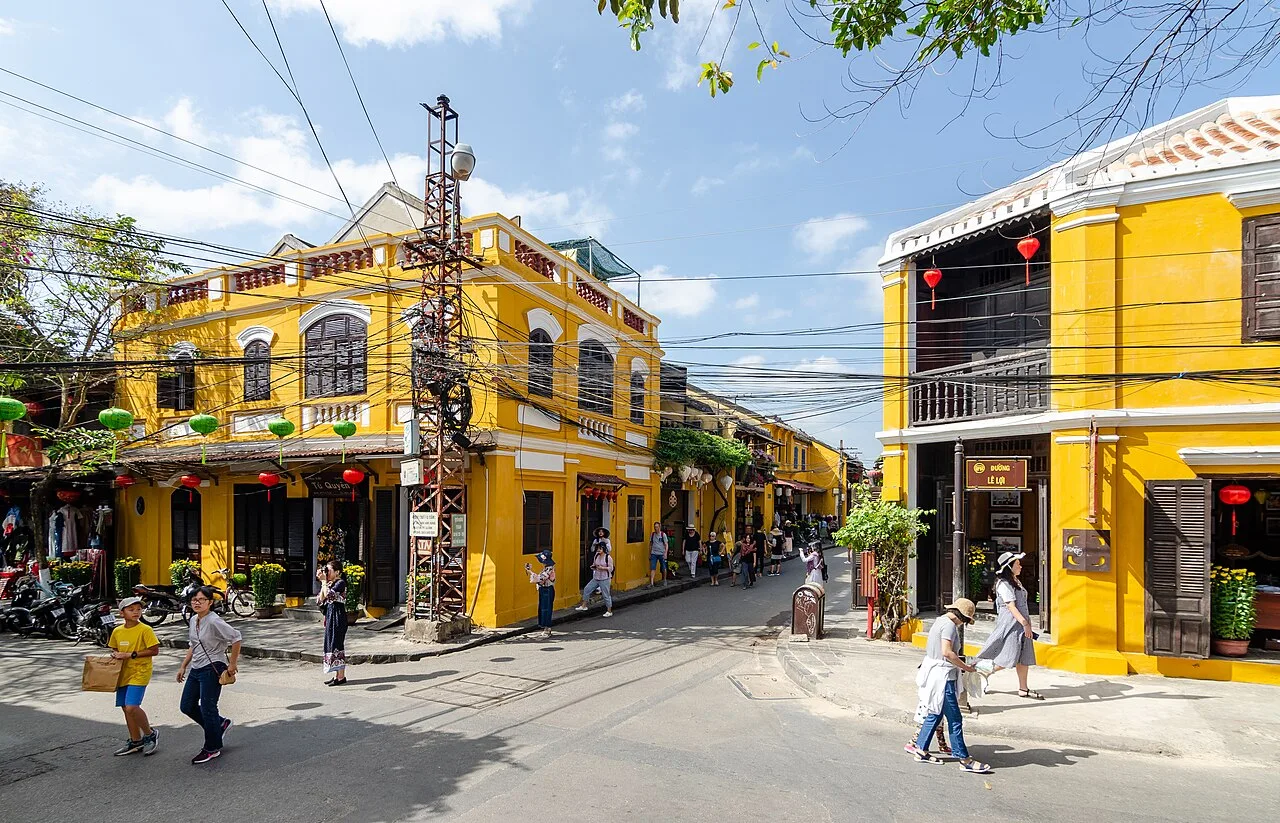
Staying inside or right on the edge of the Ancient Town lets you see it at its best: early in the morning, when the streets are almost empty and the light is soft, and late in the evening, when the lanterns are lit and the day-trip crowds have gone. Restaurants, cafés, tailors and the riverside market are all on your doorstep. A sightseeing ticket is needed to enter the heritage area and its historic houses, and parts of the centre are closed to cars at set times, so with large luggage a hotel just outside the pedestrian zone is often more practical. The busiest streets are noisy in the evening, and the riverfront can flood in the rainy season.
What about Cam Pho and An Hoi?
Cam Pho, west of the Ancient Town, is a short walk from the old streets and has a wide choice of small hotels and homestays at lower prices than the centre. Roads here are busier, but it’s a practical, good-value base. An Hoi, across a footbridge from the Ancient Town, is a small island neighbourhood with a night market and riverside views; it puts you close to the lanterns and boats in the evening, though the bridges get crowded. Cam Nam, another river island to the south, is quieter and more local.
Is it worth staying among the rice fields?
For many returning visitors, yes. The areas north of town, including Cam Chau and the Tra Que vegetable village, are ten minutes from the Ancient Town by bicycle, with villas and homestays set among green paddies. You often get a pool, a garden and real quiet for less than in town, and many properties lend bicycles for free. Further east, Cam Thanh is known for its coconut palm waterways and round basket boats. The trade-offs are dark country roads at night, mosquitoes at dusk and the need for a bicycle or taxi to reach town.
Which beach should I choose?
An Bang, about 4–5 km north-east of the Ancient Town, is a relaxed beach with seafood restaurants, beach bars and small bungalow stays, popular with travellers who want the sea and the old town in one trip. Cua Dai, to the east, and Ha My, further north towards Da Nang, are home to larger resorts with big pools and gardens. Parts of Cua Dai have suffered from beach erosion in recent years, so look at recent guest photos before booking a beach stay there.
Hoi An areas compared
| Area | Best for | Getting around | Watch out |
|---|---|---|---|
| Ancient Town (Minh An) | Short stays, evenings, history | On foot | Crowds, noise, car restrictions, river flooding |
| Cam Pho | Value near the old town | Walk or bicycle | Busier roads |
| An Hoi / Cam Nam | River views, night market | Footbridges to the old town | Crowded bridges in the evening |
| Cam Chau / Tra Que | Calm, villas with pools, cycling | Bicycle or short taxi | Dark roads at night, mosquitoes |
| Cam Thanh | Nature, coconut waterways | Bicycle or taxi | Further from town |
| An Bang beach | Beach plus old town | Bicycle or taxi | About 4–5 km from town |
| Cua Dai / Ha My | Big resorts, families | Car or resort shuttle | Erosion in places; far from town in the evening |
Where are these areas?
Markers show the approximate centre of each area. Map data © OpenStreetMap contributors.
Who should stay where?
- Two nights, first visit: the edge of the Ancient Town or Cam Pho.
- Couples on a slow trip: the rice fields or An Bang.
- Families: a villa with a pool in the rice fields, or a beach resort.
- Budget travellers: Cam Pho or An Hoi homestays.
- Tailoring, cooking classes and food tours: close to the Ancient Town.
When should I go?
The most pleasant months are usually February to April, when it’s warm and fairly dry. May to August is hot and sunny, good for the beach but tiring for sightseeing in the middle of the day. From about September to December, heavy rain can flood the riverside streets of the Ancient Town and nearby neighbourhoods; if you travel then, choose accommodation away from the river and book flexibly with free cancellation. Each month, on the evening of the full moon, the town dims its electric lights and the lanterns take over, which is a good reason to stay overnight.
How do I get around?
Walking is the best way to explore the Ancient Town. Bicycles are the classic way to reach the rice fields and An Bang beach, and many places to stay lend them for free. Ride-hailing cars and motorbikes are available for longer trips, and Da Nang International Airport is about 40–50 minutes away by car; see Da Nang Airport to your hotel. Many travellers combine Hoi An with Da Nang’s beaches; Hoi An or Da Nang explains how to split your stay.
How many nights should I stay in Hoi An?
Most visitors find Hoi An hard to leave. Two nights is the minimum to enjoy the Ancient Town in both the early morning and the evening without rushing. Three or four nights let you add a cooking class, a bicycle ride through the rice fields, a beach afternoon at An Bang and a day trip to the My Son temple ruins. If you’re also visiting Da Nang, two or three nights in Hoi An followed by a few beach nights is a popular rhythm.
Things to check before booking
- Whether a car can reach the entrance if you have large luggage.
- How far it really is to the Ancient Town or the beach, on a map.
- Whether bicycles and breakfast are included.
- Airport transfer prices if you’re arriving late.
- Recent reviews mentioning flooding, noise or mosquitoes.
Notes for families and travellers with reduced mobility
The Ancient Town is flat but has uneven pavements, narrow lanes, high thresholds and steps into historic houses, and evening crowds are dense; mornings are easier with a pushchair or wheelchair. Larger resorts on the beaches generally have the best step-free access. Child seats are not standard in local taxis, so bring a travel seat or book a transfer that provides one. Midday heat is intense for much of the year; plan sightseeing for early morning and late afternoon.
FAQ
What is the best area to stay in Hoi An?
For a first visit, the edge of the Ancient Town; for calm and value, the rice fields of Cam Chau; for the beach, An Bang.
Is it better to stay in the Ancient Town or at the beach?
The Ancient Town is best for short stays and evenings; the beach suits longer, slower trips.
How far is An Bang beach from the Ancient Town?
About 4–5 km, around 10 minutes by taxi or 20 minutes by bicycle.
Does Hoi An flood?
The riverside streets can flood in the rainy season, roughly September to December; choose accommodation away from the river then.
Get new where-to-stay guides by email
One short email when we publish a new city guide. No spam, unsubscribe any time.
We will email you to confirm. See our privacy policy.

We are a small independent team based in Seoul. We compare neighbourhoods using official tourism and transport sources, maps and current guides, and we say clearly when something is research rather than a personal stay. No sponsored placements. About us and how we work.
Sources: Wikipedia – Hoi An · Hoi An Centre for Cultural Heritage Management and Conservation · Vietnam National Authority of Tourism – Vietnam.travel · Da Nang Tourism – official guide · Wikipedia – Da Nang International Airport